


Powering Millet Revival: How Solar Energy is Transforming Farmer Enterprises in Jharkhand
For generations, finger millet or madua, was more than just a crop for tribal communities in Jharkhand. Suited to local landscapes and resilient enough to withstand droughts, it was part of their culture. However, over the last few decades, the cultivation of millets, especially finger millet, has significantly declined as paddy and high-yielding crop varieties have come to dominate.
Today, that trend is beginning to reverse. As farmers grapple with erratic rainfall and unpredictable climate patterns, millets are re-emerging as a climate-resilient staple. Over the past two years, millet cultivation in Jharkhand has expanded from 20,000 to 90,000 hectares. The Jharkhand Millet Mission 2024 (Jharkhand Madua Revolution) and rising consumer demand have contributed to this shift.
India’s renewed focus on millets has created an opportunity to rethink the entire value chain — from what is grown to how it is processed, stored and marketed. Initiatives such as the International Year of Millets (IYM 2023) and the National Food Security Mission (NFSM), along with support measures, including incentives and subsidies, have helped revive millet cultivation.
But reviving millets does not necessarily translate to profitable livelihoods. That requires institutions such as Farmer Producer Organisations (FPOs), Cluster Level Federations and cooperatives capable of organising farmers, negotiating in markets and managing shared infrastructure. Critically, it requires reliable energy to make processing viable.
Decentralised Renewable Energy (DRE) can power milling, drying, storage and other post-harvest activities, while reducing losses, improving product quality and enabling farmers to add greater value to produce. When combined with strong local institutions and shared infrastructure, DRE can help leverage the recent millet resurgence to drive sustained rural economic growth.
Two districts in Jharkhand are already demonstrating this potential.
Two Districts, One Shared Lesson
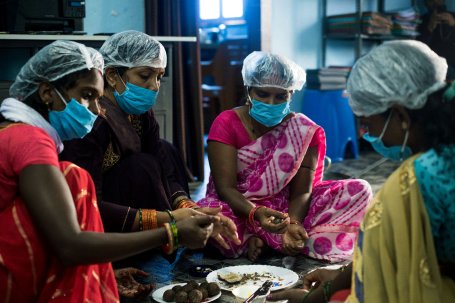
Khunti district is home to a predominantly tribal population that depends on agriculture and forests for their livelihood. For years, Nav Bharat Jagriti Kendra (NBJK) has worked to mobilise communities, develop irrigation infrastructure and form women’s collectives in the district. NBJK also established the FPO Murhu Nari Shakti Kisan Producer Company Limited (MNSKPCL).
While the FPO had already established the governance structure, a farmer base, and was leveraging existing market linkages, it lacked reliable energy, which is essential for processing and value addition.
In Deoghar district, Srishti Fish Farmers Producer Organisation, supported by Network for Enterprise Enhancement and Development Support (NEEDS), provided high-quality seeds and offered buyback guarantees for millets, within the same price range as the Minimum Support Price (MSP). This brought fallow land back under cultivation and helped rebuild farmers’ confidence in a crop many had long abandoned. However, unreliable power was a binding constraint here as well.
Although the contexts differed, both organisations initially faced similar challenges. Frequent power outages made agro-processing unreliable, diesel-powered alternatives were expensive to operate, and farmers often had to rely on distant mills that provided inconsistent quality. Without local processing, much of the value generated from millets was lost before reaching the market.
What Reliable Energy Actually Changes
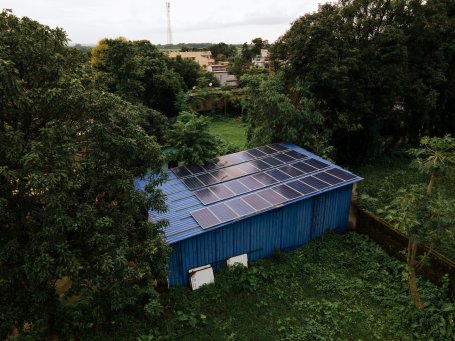
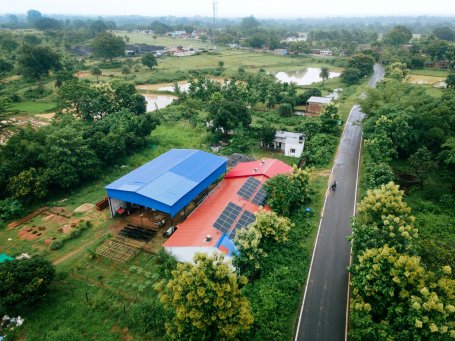
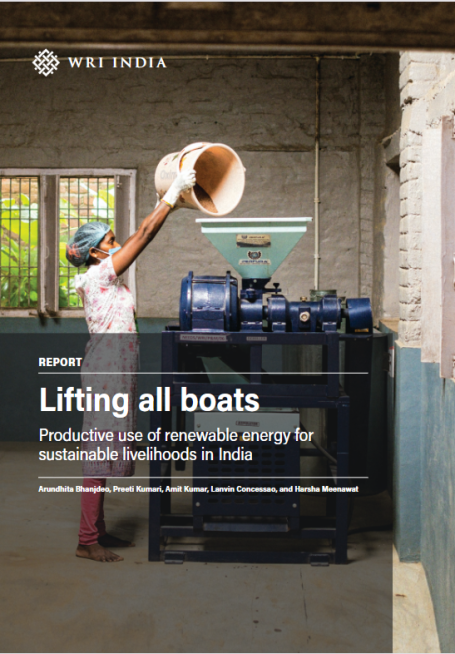
In 2023, NBJK, in partnership with WRI India, installed a hybrid solar-powered millet processing unit in Khunti, enabling uninterrupted power for cleaning, grading and milling. In Deoghar, NEEDS installed a solar-powered processing unit in 2023.
Consistent millet processing is now enabling these FPOs to aggregate produce locally instead of losing out to distant mills. They are also able to ensure consistency in product quality, which in turn strengthens their bargaining position with buyers. This has opened the door to diversifying into higher-value products such as millet flour, cookies and laddoos rather than just selling the grain.
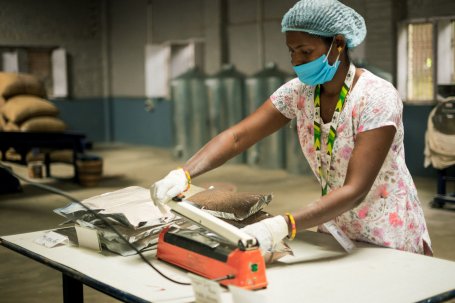
The impact of decentralised millet processing is evident across Khunti and Deoghar. FPOs have strengthened their businesses, increased farmers’ incomes and expanded market opportunities.
In Khunti, MNSKPCL earned approximately five lakhs in profit from millet processing during the financial years 2023-24 and 2024-25. MNSKPCL was also recognised as the FPO of the Year - 2025, for community enterprise and leadership. It is now working to reduce processing losses, secure institutional buyers — including government nutrition programmes — and expand into bakery products.
In Deoghar, the enterprise generated ₹1,00,000 in profits over the last two years, FY 23-24 and 24-25, and is pursuing licences for value-added products and larger markets. Shristi FPO set up in-house processing with the help of the solar unit, giving it a direct handle on processing and pricing.
These enterprises are also generating broader social benefits. Women are playing more active roles in producer organisations, local employment opportunities are expanding through processing and marketing, and communities are regaining access to nutritious traditional foods.
Improving Livelihoods through Decentralised Renewable Energy
The success of these two FPOs, along with several others documented in WRI India’s report Lifting All Boats, illustrates how renewable energy can address processing bottlenecks, improve value addition, and enable local enterprise development. Combining a climate-resilient crop with renewable energy yields a double dividend. In both Khunti and Deoghar, DRE made a difference by building on an existing institutional base, pre-existing community mobilisation, women-led governance and market linkages.
Without these complementary institutional and market linkages, the benefits of the solar units would have been limited. The state can use the Jharkhand Millet Mission as a platform to scale these solutions by integrating renewable energy into millet processing, thereby helping farmers and collectives improve their livelihoods.