


Economy of a Sal Leaf: Restoring Agency to Women in Bastar
A soft light falls across a veranda in Bastar as two hands nimbly stitch ‘pattals’ — plates that are made by binding seven to eight Sal leaves — on a sewing machine.
For generations, traditional pattals have been exchanged within forest communities of Chhattisgarh. "My mother used to give thirty pattals to our neighbour if they were celebrating a special occasion, and they would do the same for us,” recalls Rambati Nag of Kesapur village. However, selling them is a new concept.
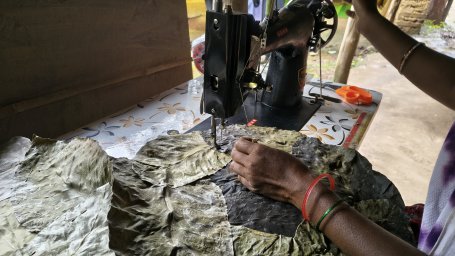
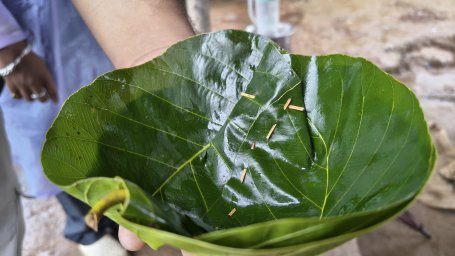
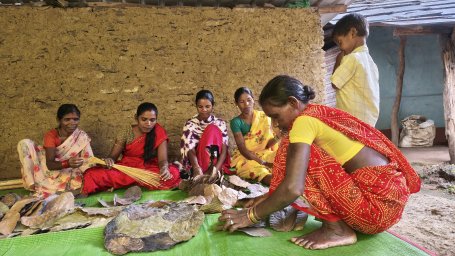
The Ma Danteshwari Self Help Group (SHG) has been making pattals in Kesapur village for over twenty years. However, the group only started seeing a steady income recently, after they started pressing pattals to make plates.
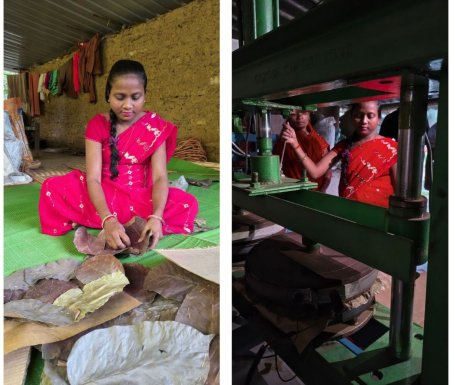
When asked what she wants to do with her earnings, Phoolmati, who is expecting a child, answers without hesitation, “A pukka (concrete) house and my own car. I want to drive."
Making Ends Meet in Kesapur
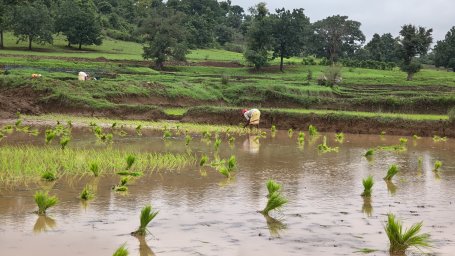
For residents of Kesapur, primarily belonging to the Gond community, income is sporadic and seasonal. Agricultural income comes from paddy and vegetables grown during monsoon months. Additionally, residents collect and sell forest products such as Tendu leaves (Diospyros melanoxylon), Mahua (Madhuca longifolia), Chironji (Buchanania lanzan), Tamarind (Tamarindus indica) and Sal leaves (Shorea robusta).
Farming and selling the raw materials and NTFPs without value addition is not enough to make ends meet. To fulfil the deficit, many migrate out in search of work.
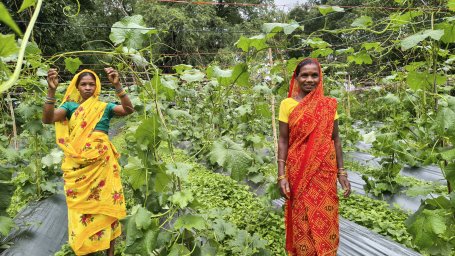
After losing her young son, sixty-year-old Champa Nag turned to vegetable farming. "Unlike men, we can't leave our village for work. Earning sources should be close to home and available throughout the year," she explains.
Chhattisgarh’s Forest Economy
About 41% of Chhattisgarh’s area is covered by forests, which comprise an important part of the local economy. In recent years, the state government has built markets and institutions around the forest economy. However, because communities that collect forest produce often need immediate cash, many sell it at very low prices to private traders or middle-men, who process the produce and sell it at higher prices in the market.
"When I was a young girl, the forest was closer to our village. I used to frequently cycle there to get firewood," Phoolmati recalls. “Bicycles are no longer allowed inside the forest, but these regulations are essential to protect our forests and save our Sal trees,” she adds.
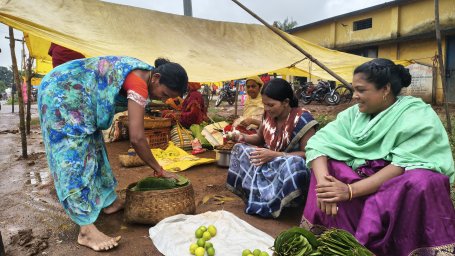
“Fresh Sal leaves fetch little at the local market. A basket of 400 leaves brings less than ₹100. The price is often bargained based on the quality of the leaves,” explains Phoolmati.
Turning Leaves into Livelihoods
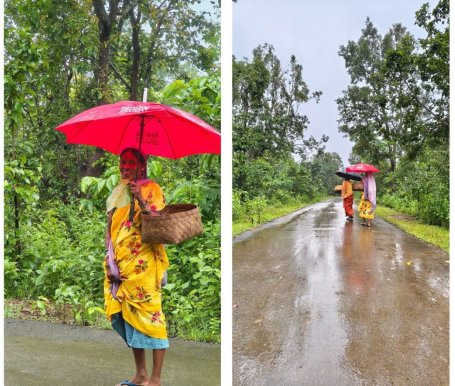
Sal tree is the official state tree of Chhattisgarh and covers nearly one-third of the state’s total forest area. Sal leaves are an important minor forest produce (MFP) or non-timber forest produce (NTFP) and are usually harvested by women between March and May when trees shed mature leaves.
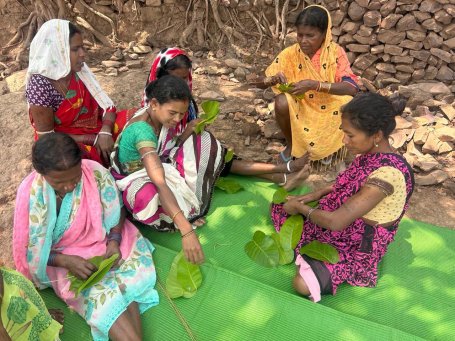
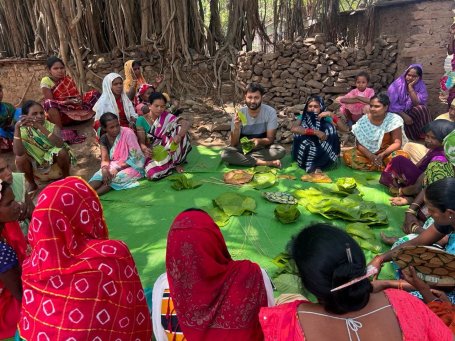
"In 2024 we started selling pattals only within our village, but they fetched only fifty paise a piece," says Rambati. However, the group recognised that by processing the leaves, they could sell them for more.
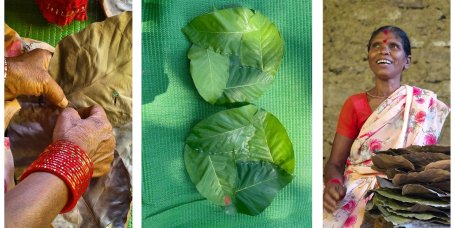
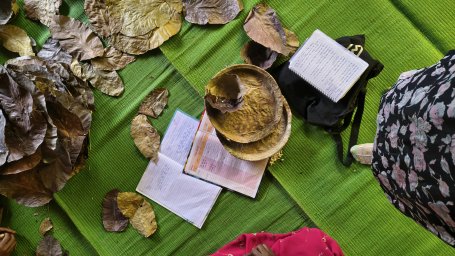
In 2024, Rambati travelled to Raipur to see how they could build Sal platemaking into a business. When buyers from Mumbai came to buy the first bundles of leaf plates, "it was like I was seeing our dream come true," she recalls.
“We raised the demand for our first pressing machine to our Gram Panchayat in the month of March (2024) and sourced sugar poly-papers from markets in Raipur. In January 2025, we made our first pressed Sal leaf plate.”
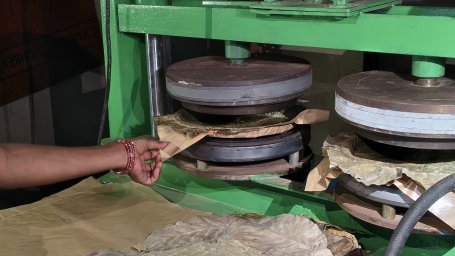
Pressing sugar poly-paper underneath the stitched pattals using heat gives them a plate-like shape. The thickness of the papers determines the sturdiness of the plates, and sturdier plates sell for more. "We source poly-papers directly from mills in Hyderabad now. The thinner sheets (60 GSM) cost about ₹65/kg, significantly lower than that in Raipur,” notes Phoolmati.
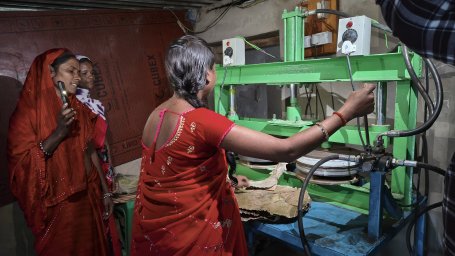
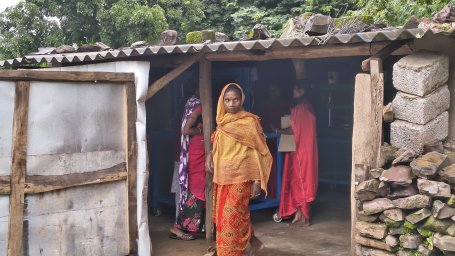
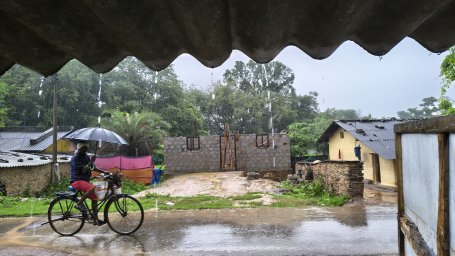
The group runs two machines inside Rambati’s tiny granary. The electricity bill for the centre comes up to ₹500 a month. They have recently bought a new pressing machine which they can’t use due to lack of space. They are eagerly awaiting the construction of a new workshop nearby.
“We have three more sewing machines and a new pressing machine. We can use them when our new workshop is ready,” Phoolmati says.
An Economic Future Built on Restoration
Phoolmati maintains detailed costing for each plate. A single plate now sells for ₹3 in the local market, earning them a profit of ₹0.4 or 40 paisa. They have also begun to buy pattals from neighbouring villages for pressing. “The initiative was started by us, but we want our whole community to earn,” explains Phoolmati.
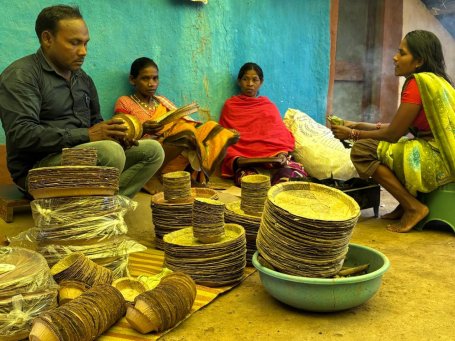
While most of the profits are invested in purchasing poly-papers, maintaining the machines and packaging, some of it trickles into better incomes for members. For Kamala Nag, who has recently purchased a tractor and is helping her husband repay a loan, it means more agency over household decisions.
This story exhibits what Restoration Economy, a model where ecology and livelihoods grow together, can look like for India. The question is not just how much a forest can provide. It is whether we can build an economy where the prosperity it creates also gives people the means to preserve the forest.
All photos by Pritha Choudhury/WRI India unless specified otherwise.
Pritha Choudhury is a consultant with the Food, Land and Water Program, WRI India.