


India’s Heat Divide: Rethinking Thermal Comfort for Equity
Kamala wipes the sweat off her brow as she cooks lunch for her two children in a small hutment in peri-urban Mumbai. The tin roof above radiates like a furnace, trapping the heat from the stove inside. A small fan whirs in the corner, circulating hot air from one end of the room to the other. Outside, the temperature is 36 °C, but for Kamala and her children, it feels far hotter.
Similar scenes can be witnessed across India’s semi-formal and low-income settlements. India is witnessing an early summer this year, with the fifth-warmest February since 1901. Mumbai touched 40°C on March 10, 2026 — the city’s highest in five years — while Bengaluru has already surpassed its April average. Kerala’s Palakkad recently experienced temperatures that were 4.7°C higher than usual. The rising temperatures and prolonged periods of humid heat pose risks to people’s health and well-being, especially when indoor spaces become heat traps.
Coolers or air conditioners are the obvious choice for residents who can afford them; but these appliances can have unintended consequences. Air conditioners transfer heat outside, where it raises local temperatures and intensifies the Urban Heat Island effect in densely built urban settlements. In addition, when temperatures soar, surging electricity demand from these devices can drive up power prices, trigger distribution grid equipment failures and cause outages.
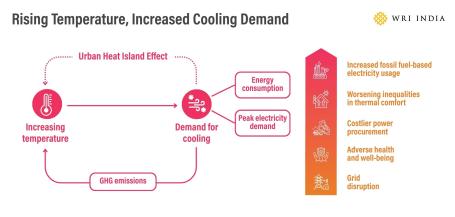
India recently saw its highest-ever peak electricity demand at 256 GW on April 25, 2026, after an all-time high of 252 GW the day before. Early summers and escalating electricity demand during summer months have now become the norm.
Disproportionate Impact of Heat
Heat affects everyone, but its impacts are far more severe for vulnerable populations — women, children and the elderly — residing in overcrowded or poorly built dwellings that trap heat. Lack of indoor thermal comfort puts them at a greater risk of illness, leading to lost wages or higher healthcare expenses. Power supply disruptions due to breakdowns at the local level disproportionately affect middle and lower-income households where backup power is rare. In houses like Kamala’s, electricity cuts often result in long hours without access to any operational cooling appliances.
Efficient and Smart Appliances
Cooling appliances remain the most accessible way of combating heat. While air conditioners are often considered the most effective option, Kamala cannot afford to own one. Most middle and low-income households depend on fans and coolers to survive summers. The resulting demand surge from cooling appliances can cause outages and lead to hefty electricity bills.
Energy-efficient appliances can significantly lower electricity bills and reduce energy demand. However, high upfront costs continue to limit access, particularly to energy-efficient appliances such as Brushless Direct Current (BLDC) fans, for many vulnerable households. DISCOM level appliance distribution and replacement programmes can reduce costs through economies of scale.
Evidence from the Energy Transition Preparedness Initiative (ETPI)’s study on DISCOM Initiatives to Promote Energy-Efficient Appliances and Equipment shows that while LED distribution programmes have achieved significant scale, similar initiatives for fans, air conditioners and refrigerators remain limited and inconsistent.
Alternatives such as rebates, as observed in Odisha, or on-bill financing (OBF), as experimented with in Maharashtra, can further ease adoption. In Odisha, the state government covered part of the cost of energy efficient fans using the Chief Minister’s Energy Conservation Fund. Similarly, Maharashtra’s electricity distribution company allowed consumers to pay for LED bulbs in instalments through their monthly electricity bills.
Energy-efficient appliance programmes can play a crucial role in accelerating adoption through bulk procurement, OBF and targeted consumer outreach, but scaling these efforts would require stronger regulatory support and sustained funding.
However, fans alone may not be sufficient for Kamala and her family to cope with the rising intensity of heat and humidity in the settlement they live in. These appliances must therefore be supplemented by other measures, including thoughtful infrastructure.
Designing Cool and Affordable Buildings
Affordable housing projects usually prioritise cost and speed of construction. They are not built for comfort in high heat and humidity. Poor housing design and the use of high thermal mass materials like concrete or low albedo surfaces significantly increase indoor temperatures. Passive design strategies such as building orientation, shading to reduce solar exposure, cool roofs to lower heat gain and ventilation to improve air circulation can lower indoor temperatures.
Thermal comfort remains largely absent from state housing programmes. Tamil Nadu’s adoption of the Eco Niwas Samhita (ENS) across its housing projects and Maharashtra’s mandate under its State Housing Policy 2025 are notable exceptions. State-led affordable building programmes can take inspiration from ENS or the Ministry of Housing and Urban Affairs’ PRiTHVi guidelines that provides guidance on incorporating passive design in single family homes. The Pradhan Mantri Awas Yojana (PMAY), set to deliver housing for 3 crore additional households, offers a crucial opportunity to integrate thermal comfort into housing design. Such houses would remain functional during extreme heat conditions and offer occupants protection from heat even when the power supply is not reliable, thus building the long-term heat resilience of communities.
Towards Thermal Comfort for All
For Kamala, thermal comfort is not a luxury; it is a matter of health, dignity and survival. The gaps between policy intent and on-ground implementation must be bridged to ensure that thermal comfort solutions are scalable, inclusive and effective. As extreme heat reshapes daily life, ensuring that every citizen can live, work and sleep safely will be the true measure of an equitable and climate-resilient tomorrow.
The Keep Cool Innovation Challenge aims to scale affordable, low-carbon cooling solutions for vulnerable communities across buildings, public spaces and livelihoods. It invites early-stage and market-tested innovators to develop people-centred solutions that build resilience against extreme heat.
To learn more, click here.