


Sweltering Shopfloors: Reflections from India’s Industrial Workers
By mid-morning, in an auto component manufacturing unit in Chennai’s Ambattur industrial estate, a worker pauses briefly. “By noon, it becomes difficult to stand in this heat,” he says, wiping the sweat off his forehead even as he turns back to the machine. He will continue work for several hours.
Extreme heat in India is intensifying in both scale and frequency. 95 of the world’s 100 hottest cities are in India and temperatures in several regions cross 45°C. Over 350 million people are employed in micro, small and medium enterprises (MSMEs) where rising heat is not looked at as a distant climate hazard, but an immediate problem — affecting workers’ health, productivity, and business continuity. A World Bank (2025) study estimates one-fifth of workers in the manufacturing hubs of Chennai and Surat could be exposed to high heat stress by 2050.
This blog examines the impact of heat on MSME workers, tapping into insights gleaned from focused group discussions with 120 MSME workers in Surat, Chennai and Coimbatore.
How Heat is Experienced on the Shopfloor
Ambattur, Perungudi and Thirumudivakkam, Chennai’s automotive manufacturing centres, experience a combination of humidity and heat. A worker in Chennai observed, “Inside factories, poor ventilation leads to heat build-up, making it harder to work.” The consequences extend beyond the shopfloor. Another worker said, “Often even at night, it is so hot that we cannot sleep properly. We end up tired and it affects work”.
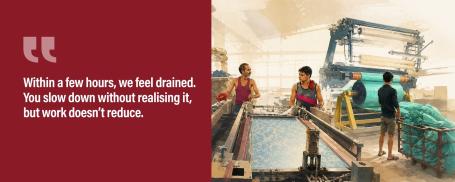
In Surat’s textile units, heat builds rapidly inside factories. Workers operating boilers and furnaces face additional exposure. “Within a few hours, we feel drained. You slow down without realising it, but work doesn’t reduce,” shared a worker.
Women face compounded exposure shaped by workplace rules, gender norms and responsibilities beyond work. Men reduce clothing layers to adapt to workplace heat. Women remain constrained by social expectations, and work in restrictive attires which limits their ability to cope with rising temperatures. What’s worse, women limit water intake in absence of hygienic sanitation facilities, increasing risk of dehydration and urinary tract infections. Women also perform tasks like cleaning, washing and cooking at home that extends physical labour and heat exposure well after working hours.
Beyond causing physical discomfort and health issues, heat impacts income. Many workers are paid piece-rate wages, with earnings tied to output. High heat reduces pace of work and causes decline in output reflecting in lower incomes. When workers fall ill due to heat and remain absent, it leads to wage loss for the entire day. “We come to work even when heat makes us sick. Missing a day means losing income,” said a worker in Surat.
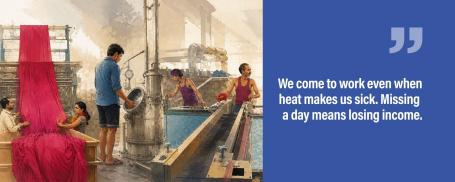
This creates a vicious cycle: heat reduces productivity, lowers income, and increases health risks that further undermine earning capacity. For MSMEs, this translates into reduced efficiency, inconsistent output and heightened workforce vulnerability.
Limits to coping
Workers informally adjust in absence of formal systems like heat protocols and institutional support. A worker in Chennai said, “We manage by drinking water, taking breaks and staying in shaded areas, when possible.” In Surat, workers cope by changing sweat drenched clothing multiple times in a day and drinking cooling beverages like lassi. However, these strategies remain reactive and incremental. “There is no real way to deal with the heat. We are used to working in the heat,” said a worker in Chennai.
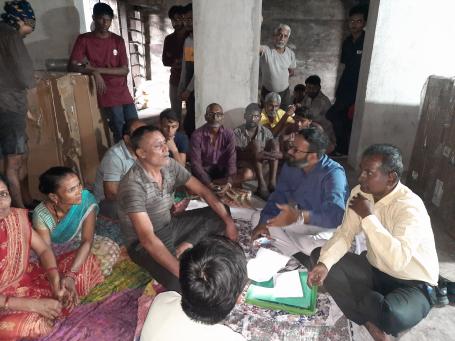
This normalisation of heat exposure masks its growing physical and economic costs.
Delaying Preparedness Increases Heat Exposure
Structural gaps persist in India’s heat preparedness. Climate policy frameworks like the National Action Plan on Climate Change (NAPCC), Nationally Determined Contributions and state or city level climate plans pay limited attention to industrial heat risks. Labour systems responsible for managing worker safety like occupational safety codes do not integrate climate risks like heat.
Heat guidance in many states recommends breaks for resting and access to drinking water and basic medical aids like oral rehydration solution (ORS), which are relatively easier to implement. However, the recommended infrastructural changes for better ventilation, cool roofs and cooling technologies remain beyond the reach of most small enterprises. While guidance exists on paper, dissemination is poor with workers lacking formal training to identify and manage heat stress.
From Incremental Fixes to Systemic Action
Low-cost measures like improving ventilation, periodic water breaks and structured work-rest cycles can significantly reduce heat stress inside factories. Simple changes to improve ventilation, use of cooling paints and shading can improve indoor thermal conditions. Improving green cover can reduce localised heat intensity and improve thermal comfort. “More trees and shade in industrial areas would make a big difference for us,” said a worker in Surat.
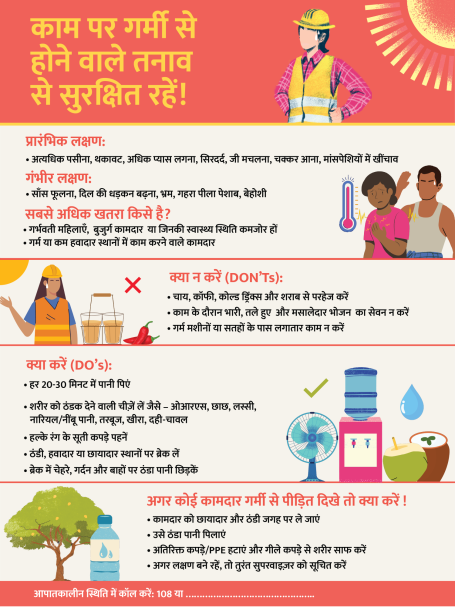
WRI India’s workshops with MSME owners and workers in Surat, Chennai and Coimbatore demonstrate that practical, low-cost interventions can improve worker safety and ensure operational continuity. These workshops reframe heat as a business risk, while worker-focused initiatives like infographics in local languages strengthen awareness about hydration, rest cycles and identifying early signs of heat stress.
Standard business operating protocols must embed heat resilience by improving workplace design, occupational safety codes and labour management practices. Stronger alignment is required between industrial planning and urban policy frameworks to improve access to finance for cooling infrastructure and the institutionalisation of early warning mechanisms.
Without proactive action, rising heat will erode worker well-being and industrial productivity at a scale that India’s manufacturing sector can no longer afford to ignore.