


Fields of Opportunity: Agriculture in Bodoland
This is the fourth blog in a series that explores Bodoland through multiple lenses, including governance, economy, quality of life, ecology and culture, to emphasise the need for context-specific planning in ecologically sensitive city regions. Read the previous blog in the series here.
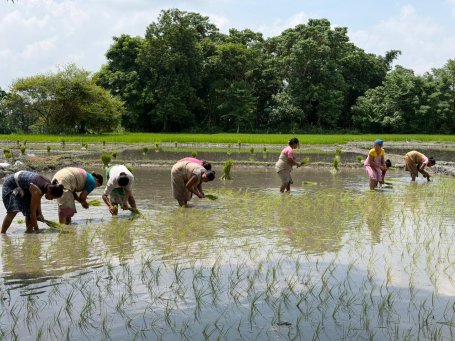
As the monsoon reaches the Himalayan foothills, farmers across Bodoland prepare their paddy fields for the kharif season. While rivers such as the Manas, Aie and Sankosh enable agriculture in the region's fertile floodplains, they can also overflow during intense rainfall, disrupting crops, infrastructure and livelihoods.
Agriculture remains the backbone of Bodoland's rural economy, supporting the livelihoods of over 60% of its population. The region has a net sown area of 3.53 lakh hectares and a cropping intensity of around 140%. Its alluvial soils, abundant rainfall and varied agro-climatic conditions support a wide range of cereals, horticultural crops, spices and plantation crops.
What is cropping intensity?
Cropping intensity is a measure of how many crops can be grown on the same agricultural land within a single agricultural year
Challenges with Traditional Farming
For generations, agriculture in Bodoland has been sustained by smallholder farming and indigenous knowledge systems. Beyond crop cultivation, it also features homestead (Bari) gardens and integrated crop–livestock systems that support household incomes and food security. These practices offer a foundation for building more diversified and resilient agricultural systems. Yet structural constraints continue to limit the sector’s potential.
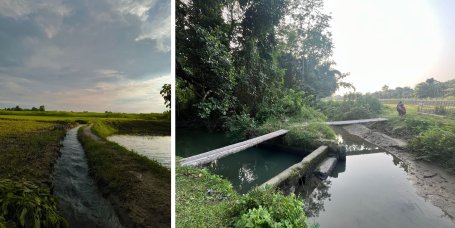
More than half the agricultural holdings in Bodoland are marginal farms of less than one hectare, limiting economies of scale, mechanisation and investment. Productivity is further constrained by limited market integration and dependence on low-input, rain-fed agriculture. Although Bodoland receives abundant rainfall, irrigation infrastructure remains limited, leaving nearly 70% of cultivated land dependent on the monsoon. At the same time, traditional water-management practices such as dong-bundh irrigation systems continue to channel water from hill streams to farms, demonstrating how communities have historically adapted to the region's varied terrain.
From Paddy to High-value Crops
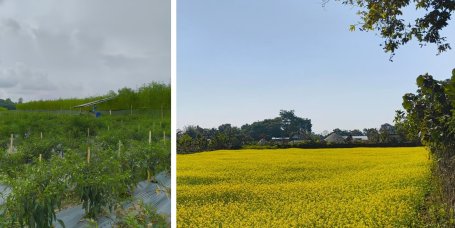
Rice remains the principal crop, accounting for over 94% of total foodgrain production with farmers cultivating three seasonal paddy varieties. However, farmers are increasingly expanding into maize, horticulture and spices to improve incomes and reduce dependence on a single crop.
The region's diverse agro-climatic conditions support commercial cultivation of fruits, spices and plantation crops, including banana, pineapple, Assam lemon and areca nut. Farmers are also experimenting with newer high-value crops such as dragon fruit, cocoa and strawberry, creating opportunities to enter emerging markets. Assam lemon (Kaji Nemu), ginger, turmeric, mushroom, traditional rice varieties and organic produce hold potential for branding, premium markets and Geographical Indication (GI)-linked value chains. This can help strengthen Bodoland's agricultural identity while creating greater value for farmers. The opportunity is therefore not simply to grow more, but to derive greater value from the region’s agricultural diversity.
Creating Value Beyond the Farm
While production systems are expanding, much of Bodoland’s agricultural economy continues to operate through fragmented and informal value chains. Inadequate aggregation, cold storage, processing facilities and market linkages often force farmers to sell raw produce with limited value addition.
However, several new initiatives are beginning to bridge this gap. The Integrated Agro-Processing Park at Lalpool in Udalguri, solar-powered cold storage units across Bodoland districts, farmer producer companies promoting organic products and district-specific initiatives under One District One Product (ODOP) programme are a few examples. The year 2026 saw Bodoland's first organic honey consignment, produced by around 500 local farmers under ODOP, exported to the United States. These shifts illustrate how stronger value chains can connect local producers with global markets.
Building on this momentum will require continued investment in agro-processing, grading, packaging and cold-chain logistics alongside stronger farmer producer organisations. Expanding mechanisation through custom hiring centres can make modern farm equipment more accessible to smallholders, while digital platforms such as National Agriculture Market (e-NAM) can improve price discovery and connect farmers to wider markets.
Strengthening Institutions for Resilient Agriculture
Agricultural growth in Bodoland will ultimately depend on the ability of farmers and rural enterprises to manage climate variability alongside economic and structural challenges. Experiences from Climate-Resilient Villages demonstrate how improved water management, resilient cropping systems, agroforestry and climate information services can help farming communities adapt to increasingly variable rainfall.
Krishi Vigyan Kendras, farmer producer organisations and other village-level institutions that connect farmers to knowledge, technology and markets, will be critical to scaling such solutions. This can help accelerate the adoption of improved farming practices, expand access to quality planting material, link farmers with government schemes and improve market opportunities. Investments in soil testing, community seed banks and extension services can further enhance productivity while conserving crop varieties that are well-adapted to Bodoland's conditions.
Women play a critical role in cultivation, post-harvest management and household food systems in Bodoland. Yet they often remain underrepresented in extension services, producer organisations and market networks. Expanding their access to training, finance and leadership opportunities can further improve both household incomes and the resilience of agricultural value chains.
By combining traditional knowledge with modern technology, stronger institutions and resilient value chains, Bodoland can transform agriculture from a source of subsistence into a driver of sustainable growth, rural enterprise and long-term prosperity.
Devapriya de Munshi was formerly a Consultant with the Climate Resilience Practice Program at World Resources Institute India.