

Changing Forests, Changing Businesses: How Climate Change is Reshaping Teakwood Enterprises
In the forested heartland of Madhya Pradesh (MP) lies Betul district, known for its high-quality teakwood. Locally known as sagwan, Betul's teakwood has been recognised under the One District One Product (ODOP) programme — a national initiative to promote a signature product from each district.
Teak covers nearly 70% of Betul’s forest area, and its management is overseen by the Forest Department. The department is also the sole authorised seller of teakwood with sales conducted through government auctions.
To ensure a steady supply of timber while maintaining forest health, the Forest Department follows a system of sustainable harvesting. Under this approach, mature teak trees are selectively removed while protecting ecologically sensitive areas, such as water bodies, steep slopes and sparsely forested patches. While the ideal age at which teak should be harvested is around 120 years, trees are typically harvested much earlier, at around 60–70 years, and then new ones are planted in their place. Opening the canopy also allows sunlight to reach the forest floor, supporting the growth of new saplings and natural regeneration.
However, as climate impacts intensify, the Kalapatha wood and furniture cluster in Betul is witnessing a changing forest and an increasingly difficult craft.
Kalapatha Wood Cluster
Established around 40–50 years ago, the Kalapatha wood cluster comprises about 8 sawmills (or ara machines) and 20 furniture enterprises. Workers hail from nearby villages, and most of the woodwork is traditionally done by the Badhai community.
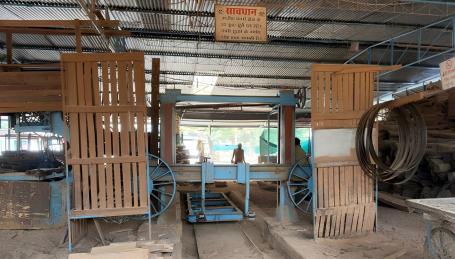
Due to their size, businesses in the cluster struggle to access wider markets and limited digital literacy restricts their access to online platforms. Gaps in skill development limit product design, making it difficult for these units to compete with changing consumer preferences in larger urban centres like Bhopal. And now, new climate risks are emerging, threatening the forests, the quality of the wood and the survival of the cluster.
A Changing Forest
Teakwood grows best in regions with annual rainfall between 900–2,500mm and temperatures between 17°C and 43°C. It is sensitive to moisture during the growing season, and rising temperatures can affect timber growth and quality.
Madhya Pradesh has seen a decline in monsoon rainfall from 1951 to 2010, and Betul is highly vulnerable to droughts. According to Global Forest Watch, forest fires — increasingly linked to climate change — were responsible for 6% of tree cover loss in Betul between 2001 and 2024. Studies also indicate that nearly 30% of India’s teak forests may become vulnerable under future climate scenarios, with MP’s teak forests potentially losing climatic suitability by mid-century.
These changes are already visible on the ground. Forest officials describe how declining surface water flow and groundwater levels are affecting forest health. Concerns such as insect damage and tree dieback — the progressive death of branches or entire trees — are also intensifying as industrial activity and agricultural expansion reduce forest cover and timber quality. In the shops, workers are noticing more white grains and weaker cuts in the wood, indicating declining quality.
From Auction to Workshop
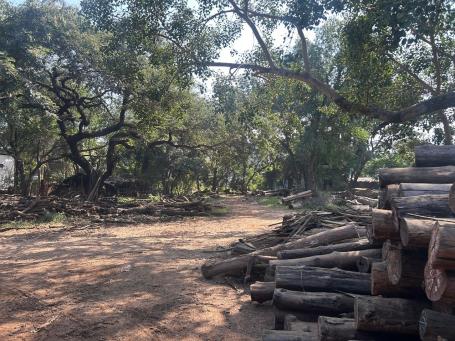
The auctioning has largely shifted online in the last two years, evoking a mixed response. While owners admit online auctions are transparent, many struggle with the process and often rely on others to place bids. As sales fall due to these challenges, logs lie in the forest depot for weeks. Exposed to heat and rain, they become susceptible to termite infestation and moisture damage.
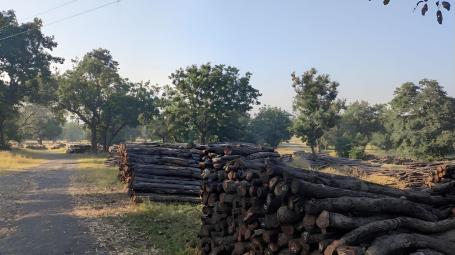
Storage constraints persist at the unit level. During monsoons, some owners move stock under sheds and rotate wood, though larger piles often remain exposed. Exposure to heat after moisture causes cracks in the wood — a growing concern as temperatures rise. Many units take fewer measures due to limited knowledge and resources, placing their bets on the idea that since “trees grow outdoors, they require minimal care.”
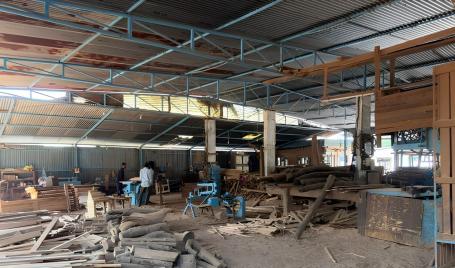
Fire poses another risk, especially when large quantities of teakwood are stored in one place. Despite multiple risks, most enterprises neither insure the timber nor their equipment.
Conditions Inside the Workshop
Most enterprises operate from small plots, where production, storage and sales occur within the same space. Indoor spaces are often poorly ventilated, with tin-sheet roofs and minimal insulation, exposing workers to rising heat stress.
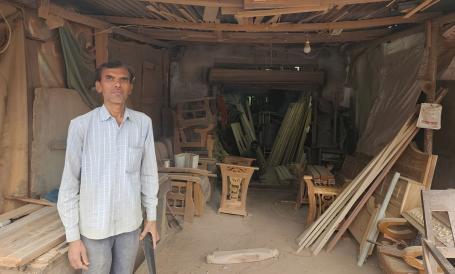
As most workers spend long hours in suspended sawdust, they are also exposed to associated health risks. Furthermore, working with heavy machinery poses grave injury risks, with several workers having lost fingers due to inadequate safety equipment.
What Support Could Look Like
Kalapatha’s experience reflects how climate pressures compound the structural challenges faced by MSMEs. From worker conditions to direct climate risks and market pressures, a range of interventions could offer essential support to the cluster.
WRI India is helping MSMEs in Betul build resilience against heat stress through workshops and working with local governments to enable climate resilience. Interventions like improved storage and simple design changes in building infrastructure, such as cross-ventilation and exhaust systems, can reduce heat stress and sawdust exposure. Furthermore, insurance for wood stock, equipment and workers can provide protection against financial losses and occupational risks.
Improving access to procurement and markets is equally important. Training for participation in online auctions can help smaller units engage more actively, while greater digital visibility and product showcasing can expand access beyond local markets. Skill training in design and finishing can help these enterprises respond to changing consumer demands.
The Betul Timber Association can help aggregate common needs and work with the MSME department. This could strengthen the cluster with shared infrastructure, common facility centres and coordinated services such as design inputs and buyer linkages. Programmes such as Micro & Small Enterprises - Cluster Development Programme (MSE-CDP), under which a wood cluster is being developed in Kadhai village, and ODOP offer opportunities to support market access and enterprise development. However, this potential remains underutilised, with no Betul products currently listed on the ODOP Bazaar platform.
With young people migrating out of Betul in search of employment, strengthening these livelihoods could create opportunities within the district. The future of these MSMEs and initiatives like ODOP hinges on understanding and addressing the trinity of climate risks, market access and enterprise capacity, together.
Mridula Sarji is a Junior Project Associate with the Climate Resilience Practice team at World Resources Institute India.