


Lessons from Mumbai’s Approach to Safer Streets
Over the next five years, Mumbai is expected to see an unprecedented expansion of its public transport network. An additional 330 kilometres of metro has been planned to connect the entire region and carry out over 10 million daily trips — equivalent to the number of trips carried out by the suburban railway. The current capacity of the suburban railway will also be enhanced through newly planned upgrades. Add the promise of 10,000 buses in Mumbai, and the total mass transport capacity in and around the city will be comparable to any major metropolis in the world.
However, realising the full potential of this massive opportunity depends on people’s ability to safely access public transport systems. This will require the city to strengthen pedestrian infrastructure, improve first- and last-mile connectivity and ensure equitable transport access, while also addressing urban heat, air pollution and flood resilience.
Despite several challenges, the city has seen tangible transformations in the past. Mumbai’s safer streets journey began in 2015, when the Brihanmumbai Municipal Corporation (BMC) undertook the design and improvement of LBS Marg, a major arterial road. The change began with a simple but consequential reframing: what if road crashes were not inevitable accidents caused by reckless behaviour, but preventable failures of design? This shift in thinking led to the adoption of the “Safe System” approach — a framework that holds the system responsible for safety rather than just the individual.
A Decade of Change
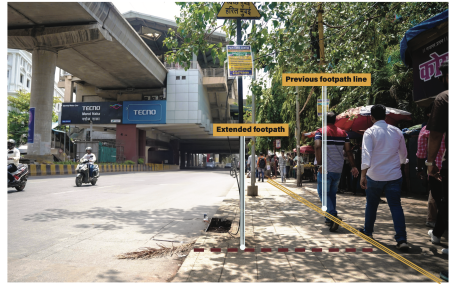
A decade later, the results are tangible. At more than 21 intersections along 20 kilometres, more than 90,000 square metres of public space has been reclaimed from car-centric corridors and oversized, high-risk junctions. Several vehicle lanes have been repurposed to in
clude sidewalks for pedestrians. The process required three years of perseverance and sustained trust-building before BMC allocated a portion of the municipal budget to pedestrian infrastructure. High-risk intersections were redesigned by reallocating road space for pedestrian infrastructure, while low-cost tactical pilots, using paint and temporary materials, enabled quick, real-world testing.
The work was backed by cross-sector partnerships spanning government, NGOs and private stakeholders, along with capacity-building programmes for municipal engineers, traffic police and contractors to implement pedestrian-centred designs.
Minimum Intervention, Maximum Impact
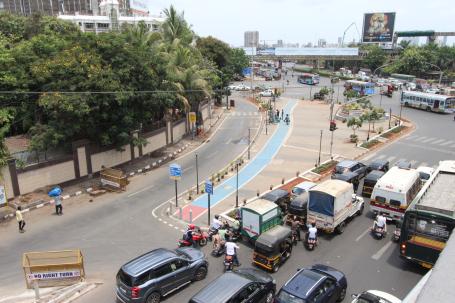
Fewer pedestrian injuries were recorded after safe street interventions were implemented at select sites. For instance, Bandra’s HP Junction reported a 75% reduction in average annual crashes involving pedestrians, while Namaha Junction in Kandivali recorded 100% decline in average annual fatalities. Moreover, 75% of the pedestrians surveyed by WRI India reported feeling safer on streets that had previously been dominated by chaotic traffic.
Notably, many attributed their sense of comfort not only to design improvements but to the vibrant street life. This included an increased presence of people on the street following infrastructure upgrades for pedestrians, and often, for vendors. The interventions worked best when they became invisible – smoothly supporting the daily rhythms of life in the city.
Intersection of Namaha S.V. Road and Shankar Lane (Near Namaha Hospital, Kandivali). Transformation of Namaha Junction from 2019 to 2023. Changes to the refuge island were made due to new bus routes with larger buses moving through the intersection. Illustrated by Akanksha Aggarwal/ WRI India.
Way Forward
The pilot interventions of the past decade have demonstrated great potential, but much remains to be done to sustain and scale these improvements citywide. Safer streets are not a luxury but a public necessity and delivering them requires perseverance, evidence and institutional support. Governments must institutionalise road safety as a policy priority, backed by rigorous data collection and regular crash investigations. Critically, such data must be acted upon, not merely filed away.
Urban planners should adopt integrated approaches to infrastructure design and promote a coordinated strategy to create vibrant and safe urban environments. Street improvements should balance civil engineering, traffic engineering and urban design that recognises the interconnected nature of street ecosystems. Investing in design capacity within local governments is vital to this process.
Streets should not be viewed as isolated pathways but as dynamic networks that facilitate people's movement, commerce and community interactions. This involves fostering inclusive collaboration among municipal bodies, the police, elected leaders and citizens to build shared ownership. Above all, cities must play the long game — such change demands years of steadfast commitment, not quick fixes and cosmetic upgrades.
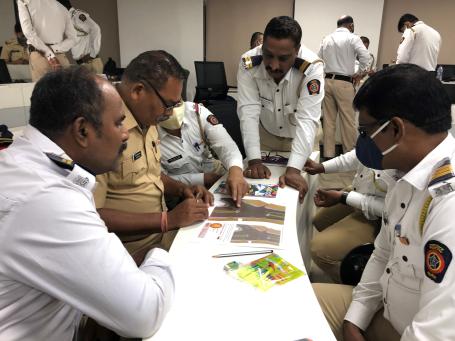
As new infrastructure investments and citywide upgrades progress, they create opportunities to embed safer street designs at scale. A “minimum intervention, maximum impact” approach can transform intersections and corridors by integrating safety considerations into routine road works, supported by continuous coordination and institutional learning.
Mumbai’s streets are a reminder that public space is our most democratic asset — it is where people meet, move, work, play and live. Saving lives through design is possible, but only if cities are willing to shift course: away from prioritising vehicular traffic and towards centring people’s safety and dignity.