


From Incentives to Mandates: What Delhi’s Draft EV Policy Gets Right — and What it Still Needs
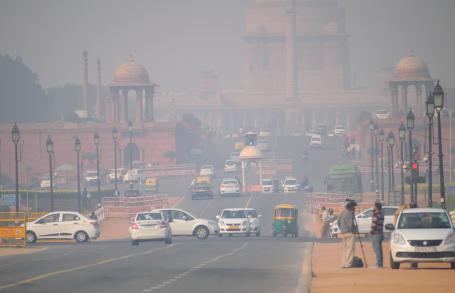
Delhi has pioneered some of India’s most forward-looking policies on transport decarbonisation. Its 2020 Electric Vehicle (EV) policy helped the capital region achieve a nearly 14% EV adoption rate by 2025, while the national adoption rate was at 8%. Building on this momentum, the Delhi Transport Department has released the Draft EV Policy 2026-30, marking a decisive shift from incentivising early adopters to mandating a system-wide transition of vehicle fleets. Drawing on the constitutional right to clean air and a pollution-free environment, the draft policy reinforces a critical message: transport electrification is no longer optional, but a central lever in addressing urban air pollution and its cascading impacts on public health.
Over the past decade, WRI India has supported the Delhi Government in planning charging infrastructure, assessing mode-wise electrification and air quality management. These efforts have consistently underscored the importance of integrating structural reforms for lasting impact. Delhi’s draft EV policy reflects the many lessons that states must prioritise to achieve India’s goal of 30% EVs by 2030.
1. From Choice to Mandates: Electrification with Clear Timelines
The most noteworthy feature of the draft is the use of firm electrification mandates, setting the most ambitious targets seen in any state EV policy so far. From Jan. 1, 2027, only electric auto-rickshaws will be permitted for new registration, followed by only electric two-wheelers from Apr. 1, 2028.
The policy also introduces a phased mandate for school bus fleets —10% electrification by year two, 20% by year three, and 30% by March 2030 — tying compliance to school-level processes and creating an institutional enforcement mechanism. Additionally, the draft calls for an explicit ban on the induction of new internal combustion engine (ICE) vehicles into four-wheeler taxi fleets, light commercial vehicles (LCV), and two-wheeler delivery fleets. These constitute the last-mile logistics and ride-hailing segments that disproportionately contribute to emissions despite having a relatively small share in total vehicles.
By mandating that all government vehicle procurement in the national capital territory — including buses and N1 trucks — will be electric, Delhi is setting an example that helps create stable, long-term demand for EVs.
2. Incentives with Fiscal Discipline, Not Dependency
Unlike earlier subsidy-heavy approaches, the 2026 draft policy adopts a tapering incentive structure focused on e-two-wheelers, e-three-wheelers, and N1 LCVs (up to 3.5 tons). The sharp tapering over three years avoids both the fiscal trap of open-ended subsidies and the potential demand shock that follows an abrupt phase-out of subsidies.
Scrapping incentives are linked to a six-month window from the issuance of a Certificate of Deposit, nudging vehicle owners toward replacement rather than adding EVs as second vehicles. For personal electric cars, scrapping incentives are capped at ₹1 lakh for vehicles priced under ₹30 lakh and restricted to the first 100,000 applicants, thereby rewarding early movers.
3. Charging Infrastructure Planning at the System Level
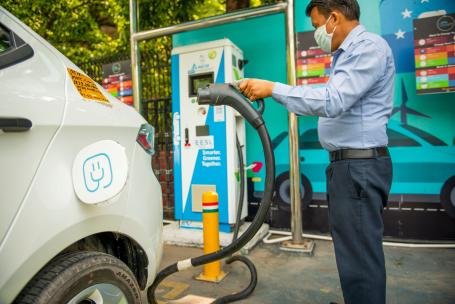
Building on the 2020 EV Policy, the new draft policy continues to emphasise charging infrastructure governance, integrating planning, coordination and implementation functions through the Delhi Transco Limited (DTL). DTL has been tasked with system-level planning to ensure site suitability and grid readiness. They will also notify technical standards and service benchmarks and enable a single-window clearance system for charging and battery-swapping operators.
Notably, these provisions are responsive to on-ground challenges faced so far in the deployment of charging infrastructure in urban areas. Another notable supply-side innovation in the policy is that original equipment manufacturers (OEMs) in Delhi must install at least one public EV charging station at every dealership.
4. Battery Lifecycle Management and Institutional Coordination
The draft policy also lays out an implementation framework for end-of-life EV battery management that aligns with the Battery Waste Management Rules. It proposes public-private partnership (PPP) -based battery collection centres, and standard operating procedures (SOPs) for reverse logistics and safe disposal of end-of-life batteries. To enable monitoring and enforcement of battery refurbishment and recycling, the policy promotes battery traceability through unique battery identifiers, in line with the national guidelines for battery pack Aadhaar numbers (BPAN), recently defined by the Ministry of Road Transport and Highways (MoRTH).
5. Where the Policy Could Go Further
Despite being one of the most ambitious state frameworks, the success of the new draft policy will ultimately depend on its ability to address four structural gaps that could slow implementation or undermine equity.
EV Financing Remains the Achilles’ Heel: Despite notable progress in India’s EV ecosystem since Delhi’s 2020 policy, access to finance constrains commercial electric vehicles —particularly e-autos, e-taxis and electric freight vehicles. Interest rates in the range of 15-20%, combined with concerns around residual value, battery degradation and weak secondary markets, continue to deter both fleet operators and lenders.
Mandates that aren’t complemented by parallel financial de-risking mechanisms can shift compliance costs onto small operators who are least equipped to absorb them. WRI India’s work on electric bus and freight financing points to the effectiveness of dedicated credit guarantees, interest subvention, and residual value guarantees in de-risking lending for banks and Non-Banking Financial Companies. Such measures can improve both the availability and the affordability of financing for these segments.
Medium- and Heavy-Duty Freight Electrification Remains a Blind Spot: The policy does not include any targeted incentives for the transition of medium and heavy-duty goods vehicles (MHDVs), despite their disproportionate contribution to emissions. This gap is especially glaring since recent national and state-level signals — such as the incentives announced under the PM eDRIVE Scheme — recognise MHDVs as a priority transition segment.
Although annual MHDV registrations in Delhi are modest (~2,500 units), targeted incentives can catalyse early momentum in this nascent but high-impact segment. WRI India’s freight electrification work has consistently shown that scalable pilots, policy support and demand aggregation are critical levers to accelerate decarbonisation.
Overlooks Charging Access in Residential and Commercial Buildings: Unlike the previous policy, the new policy does not extend charging infrastructure provisions to buildings. Destination charging at homes and in commercial buildings faces persistent barriers such as limited awareness of connection processes, resistance from residential welfare associations, capital constraints, and absence of community charging facilities. Addressing this requires right-to-charge mandates that empower residents and support mechanisms for shared charging setups in housing societies and commercial properties.
- Mandates Must be Coupled with a Just Transition Pathway: A critical gap in the draft policy is the absence of a livelihood transition framework. The policy mandates EV-only registrations across multiple segments but misses the mark on acknowledging the implications for drivers, mechanics, spare-parts dealers, fuel station workers and informal service providers whose skills and incomes are primarily tied to ICE vehicles. New EV-related jobs require different skillsets and training that ICEV workers may lack, potentially excluding them from the transition. Proactive upskilling programs and EV-focused ecosystem development can ensure an equitable transition while strengthening the service infrastructure needed to accelerate broader EV adoption.
Delhi’s draft EV Policy rightly signals that the era of voluntary adoption is over. But mandates must be matched with enabling systems — finance, infrastructure access and workforce readiness — for a durable and equitable transition. Addressing these gaps can help implement the policy on scale and make it more resilient to geopolitical and market shocks.