


A Tale of Two Cities: Toward Low-carbon Buildings
By 2050, more than half of India’s population is expected to live in urban areas. As cities expand, skylines are rising, and new buildings are emerging every day. In India, buildings account for almost one-third of energy consumption. This energy demand could triple by 2050 unless the country shifts to more efficient practices.
Buildings, where we live, work and gather, are thus becoming key players in India’s climate future. If designed well, they can not only help meet India’s climate goals and Nationally Determined Contributions (NDCs), but can also reduce emissions, offer thermal comfort, withstand extreme weather and contribute to healthier cities.
This is where the story of Nashik and Thiruvananthapuram begins — two cities, with very different climates, histories and challenges, yet united in their journey toward low-carbon and climate-resilient buildings.
Why Climate-Resilient Buildings?
Kerala and Maharashtra are experiencing rapid urban growth alongside rising climate vulnerability. Between 2001 and 2011, Kerala’s urban population almost doubled, while Maharashtra saw a significant increase in urban population from 42.43% in 2001 to 45.22% in 2011. By 2050’s, Thiruvananthapuram (Kerala) is projected to grow 1.25–1.55°C warmer, and Nashik (Maharashtra) could heat up by 2- 2.4°C, escalating cooling needs and subsequent emissions.
Rising temperatures and extreme weather events emphasize the need to adapt the built environment of cities to a changing climate. Buildings are long-term assets and the way cities are built today will shape energy use and emissions for decades to come.
Engaging Two Cities with One Common Goal
Under the All in for Net Zero Built Environment Initiative, WRI India facilitated discussions with public and private stakeholders in Nashik and Thiruvananthapuram, laying the foundation for the Net Zero Carbon and Resilient Buildings (NZCRB) City Action Plans for the two cities.
Nashik is a growing business hub, and a lot of the buildings belong to businesses and private sector players. On the other hand, Thiruvananthapuram, the capital city of Kerala, has numerous public sector and administrative buildings. Consequently, the approaches followed for the two cities vary.
Nashik: Industrial Growth, Rising Heat

Nashik, the wine capital of India, is dotted with industrial clusters.
Recognizing the role of the private sector in the city, WRI India invited architects, developers and industry professionals to the discussions. While the discussions saw strong participation, a major challenge was the low awareness of whole-life carbon, especially among fresh graduates entering the building sector.
Whole life carbon includes operational carbon and embodied carbon. Operational carbon — energy used while a building is functioning — is better understood. But embodied carbon — the emissions from building materials and construction — remains largely overlooked. This gap highlights the need to strengthen education, training and certification for young professionals.
Thiruvananthapuram: Humidity and Rapid Changes

Thiruvananthapuram, the administrative center of the state, is growing rapidly, driven by large infrastructure projects such as the Vizhinjam International Seaport and Technocity, amid rising temperatures and heavy rains.
Stakeholder engagements brought together state agencies and institutions to form a working group comprising government representatives, architects, academia, civil society and industry members. This ensured that the city’s NZCRB plan was rooted in local knowledge and practical realities. However, the lack of strong policies on green public procurement, green incentive dissemination frameworks, and carbon emission data posed a key challenge.
Navigating Challenges Through Collaboration
Both cities encountered similar challenges in turning their NZCRB visions into reality. Urban local bodies often had limited capacity and awareness about embodied and whole-life carbon. The perception that green materials are expensive, a shortage of technical training and the lack of adequately skilled workers also acted as barriers. Responsibilities related to building regulations, energy efficiency and disaster management were fragmented across different departments, making coordination difficult. Despite these hurdles, the process created valuable opportunities for building awareness, forming new partnerships and fostering stronger collaboration across sectors.
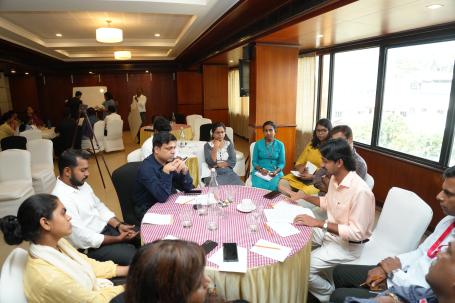
A key learning was that climate action becomes stronger when people work together. In Thiruvananthapuram, public sector leadership from Kerala Public Works Department, Energy Management Centre-Kerala, Kerala State Electricity Board and Kerala State Disaster Management Authority, helped bring in diverse viewpoints. In Nashik, active involvement from the private sector — architects, builders and other building professionals — led to practical, design-driven solutions.
Each group brought its own understanding of how buildings can become more resilient and climate aligned. These conversations became spaces for learning, debating and cocreating solutions informed by ground realities.
Lessons from the Journey
Several lessons emerged from this journey. First, local context matters; what works for Thiruvananthapuram may not work for Nashik. These solutions need to be tailor-made for each city, since climate, geography, economy and governance shape these solutions. Second, capacity-building is essential; without awareness of whole-life carbon, meaningful and lasting change is hard to achieve. Third, collaboration is key; it fosters ownership, making climate action far more effective when government, industry, academia and communities work together. Finally, data and policy must move hand-in-hand, as strong ideas cannot progress without reliable baseline data and institutional support.
The Road Ahead
Both cities undertook different journeys to chart the way ahead based on their unique features:
- Thiruvananthapuram is creating an institutional roadmap supported by the Municipal Corporation and Energy Management Centre.
- Nashik is shaping design-focused, practical solutions through a motivated group of architects and developers.
The journey of Nashik and Thiruvananthapuram marks an important step toward a climate-conscious urban India, proving that climate action doesn’t have to be top-down. Cities can lead real and sustainable change through collaboration and knowledge-sharing.
As India continues to grow — especially tier 1 and tier 2 cities — the dissemination of ideas around NZCRBs, and the mechanisms needed to build more resilient and low-carbon buildings, are becoming essential. With sustained effort, cities can shape buildings that are smarter, greener and more resilient.