


Accelerating Cooling and Thermal Comfort in a Warming India
It’s mid-April, and the afternoon sun already feels unforgiving as cities across India breach the 40-degree mark. The searing heat presses down on your skin, affects your mood and turns everyday tasks into quiet endurance tests. On asphalt roads, the heat casts mirages while inside tin-roofed homes, it lingers — trapped, unmoving, suffocating. For millions across India, this is a daily reality.
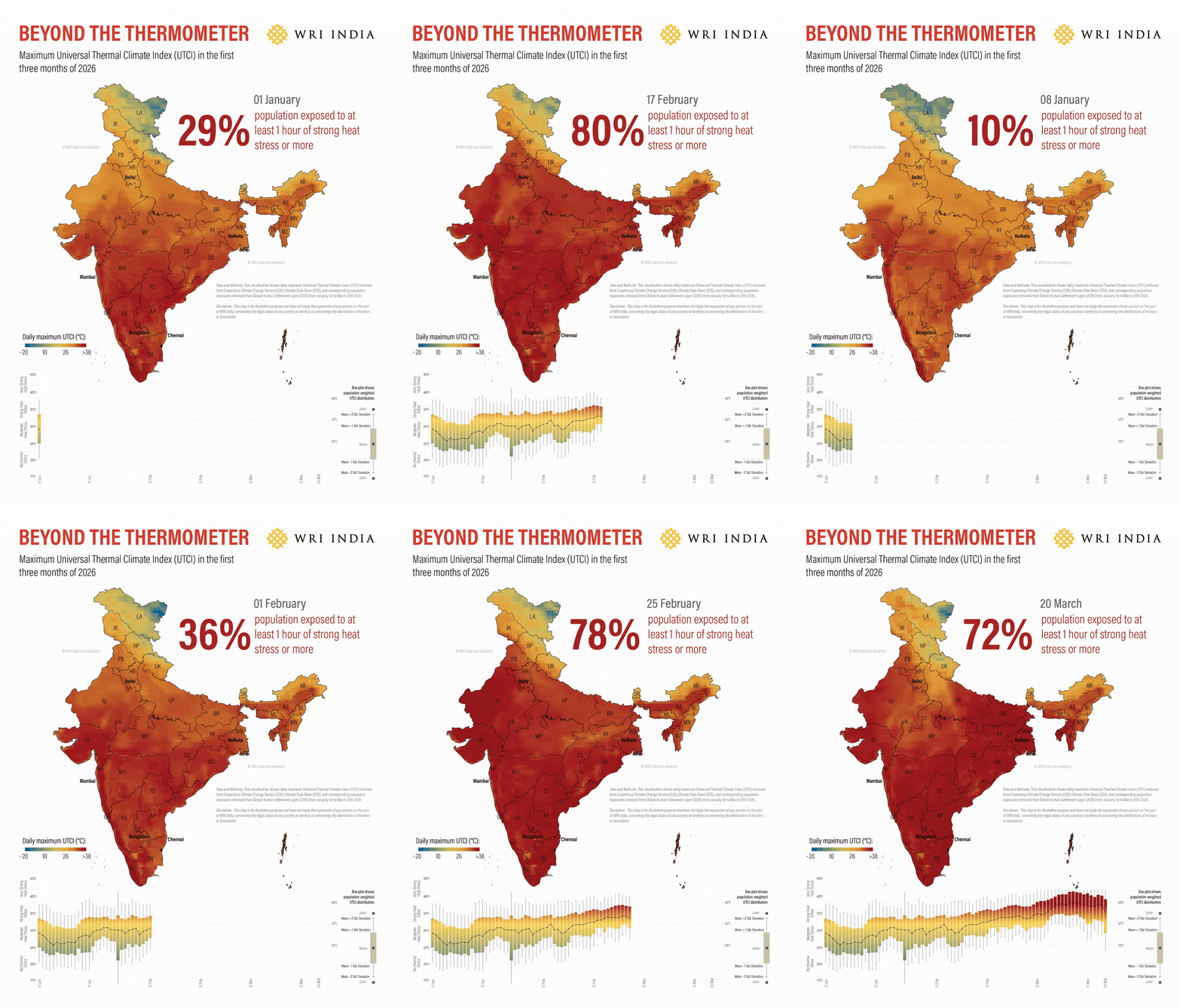
Extreme heat has become one of the deadliest climate-related hazards, causing more fatalities annually than floods, storms and cyclones combined. Scientists at Oxford University suggest that even if global warming is limited to 1.5°C, the number of people living in extremely hot regions will more than double — from about 1.5 billion today to nearly 3.8 billion in 2050. India is among the countries most expected to be affected by rising temperatures.
Heat is not just an environmental issue for us anymore — it’s an economic and systemic challenge. India’s grid system is increasingly strained due to rising cooling demand during intense heat and reduced supply reliability of both conventional and non-conventional energy sources. In 2024, cooling was responsible for 40-50% of the evening peak demand of 240 GW. In 2021 alone, India lost 5.4% of its GDP (159 billion USD) due to the impact of extreme heat on the services, manufacturing, agriculture and construction sectors.
Unequal Access to Cooling in India
In India, access to cooling remains deeply unequal. Air conditioner penetration in urban households averages just 10%, rising to about 20–25% among higher-income groups, particularly in metro cities. For households with fewer resources, coping with extreme heat is far more challenging.
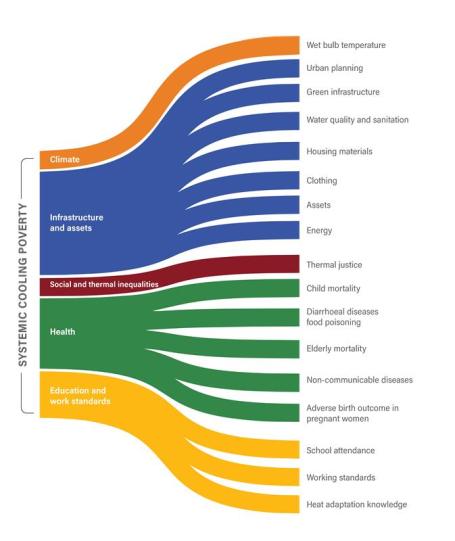
People’s vulnerability to heat stress is shaped by a complex mix of factors: physiology and health, the quality of housing and daily mobility patterns — including prolonged exposure during commutes and access to passive infrastructure at workplaces, schools, etc. When people, households or organisations lack the infrastructure needed to protect themselves from dangerous heat and humidity, this ‘systemic cooling poverty’ impacts their health, livelihood, safety and overall quality of life.
Sustainable and Affordable Cooling Solutions for Vulnerable Communities
Outdoor workers, such as construction labourers, delivery workers and farmers, are exposed to prolonged heat with limited access to shade, drinking water or rest. For instance, salt pan workers, primarily women, spend long hours standing in the scorching sun to harvest salt, often without access to toilets. As a result, many deliberately avoid food and water until their shifts end, significantly increasing their risk of dehydration and heat stress.
Cooling is also needed to sustain livelihoods. In agriculture, unreliable energy access undermines cold chain systems, leading to significant postharvest losses. For smallholder farmers, lack of access to basic cold chain infrastructure means lost income, reduced bargaining power, and increased vulnerability to price fluctuations.
There is an urgent need for cooling and thermal comfort solutions across the spectrum to address these interlinked challenges. These solutions must be rapidly identified, tested, adapted and mainstreamed at speed and scale to respond effectively to rising heat. Critically, this requires enabling and leveraging innovation in both sustainable cooling technologies (including efficient mechanical systems and climate-friendly refrigerants) and thermal comfort approaches. Focusing on one without the other will not suffice to address systemic heat stress.
An Ecosystem to Mainstream Innovative Cooling Solutions
Equally important is the ecosystem that enables such solutions to emerge and scale. Innovators — startups, researchers, NGOs or grassroots practitioners — often face significant barriers, such as limited access to testing environments, lack of early-stage risk capital, fragmented stakeholder networks, and insufficient pathways for validation and scale-up. Bridging this gap requires platforms that do more than identify promising innovations; they must actively support innovators through testing, business mentorship and piloting opportunities. This is where the Keep Cool Innovation Challenge comes in.
The Keep Cool Innovation Challenge, launched recently by WRI India in partnership with Centre for Environmental Planning and Technology (CEPT) University’s Research and Development Foundation (CRDF) - Center for Advanced Research in Building Science and Energy (CARBSE), Social Alpha, Upaya Social Ventures and ACT, aims to bridge this gap and play a catalytic role in scaling such innovations. It is designed to accelerate affordable, scalable and low-carbon cooling solutions for those who need them most. The Challenge focuses on three key areas for cooling and thermal comfort:
- The built environment
- Places of residence, work, education and commute
- Cooling solutions that support livelihoods and supply chains for vulnerable communities
During the first phase, the Challenge will identify, test and validate solutions for vulnerable groups, including residents of informal settlements, gig and outdoor workers, smallholder farmers, public health facilities, schools, Anganwadis, and micro and small enterprises, across diverse climatic zones and geographies. The Challenge is open to both early-stage innovators with validated prototypes and advanced-stage solutions with market-tested pilots.
Resilience to rising heat stress should not remain a privilege but a shared public good. The Challenge aims to ensure this by enabling cooling pathways that are effective, equitable and grounded in the lived realities of those most affected by extreme heat.
To know more visit: Keep Cool Innovation Challenge Calls for Affordable, People-Centred Solutions to Beat the Heat | WRI India.
To apply, click here.
Nikhil John is Head of Climate Finance, Sustainable Cities at the World Resources Institute India.