

Charting 15 Days of Heat
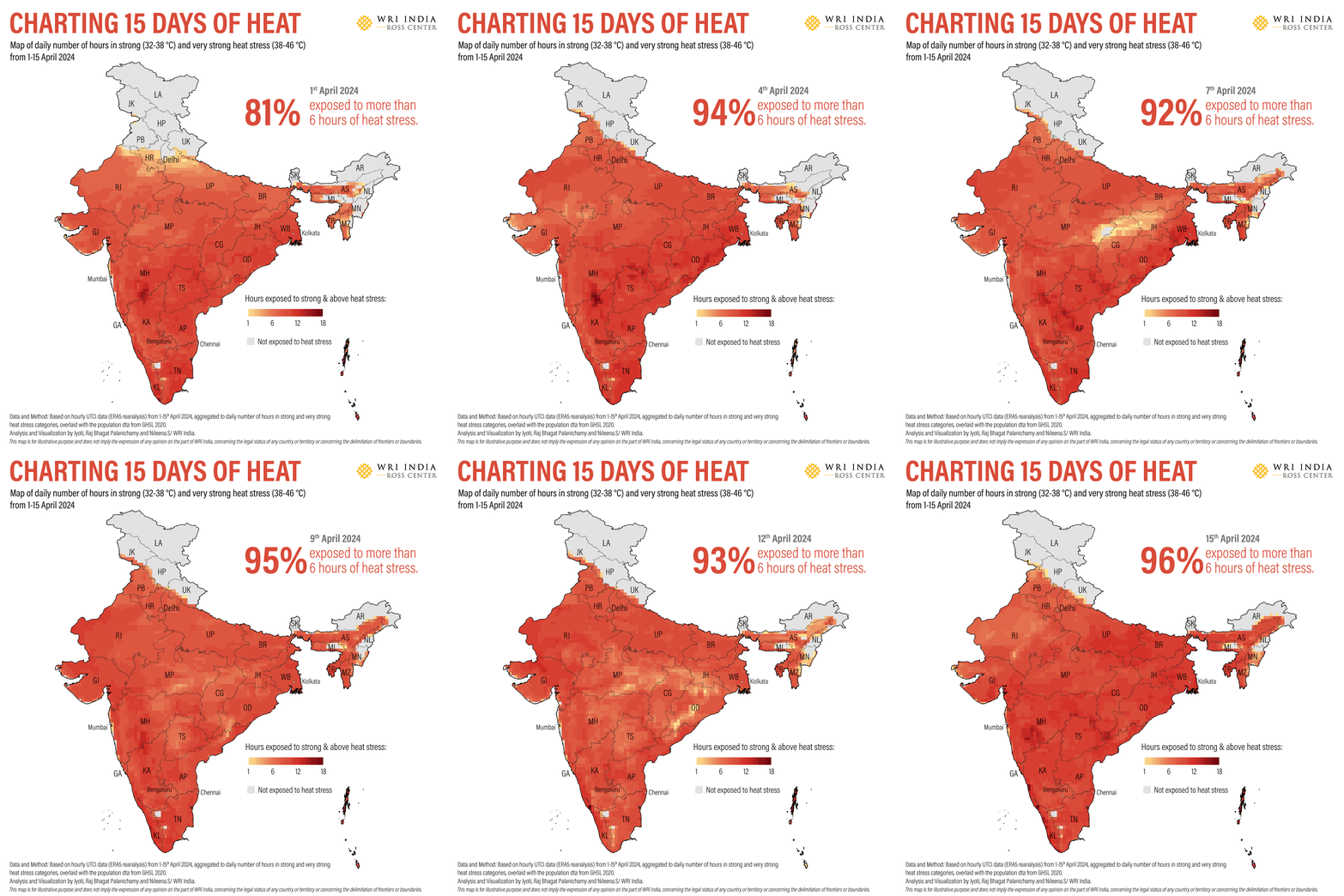
With last year being the hottest on record, the call for action has never been more urgent. As India scorches through what promises to be a relentless summer, at least 80% of the population was found to be exposed to strong and very strong heat stress for more than 6 hours in the first 15 days of April alone. Come May, the temperatures will only rise with vulnerable communities facing the brunt of it.
Existing vulnerability assessments largely focus on exposure to hazards, overlooking socio-economic factors that primarily determine the vulnerability of people and communities.Assessing differential vulnerability is particularly important in Indian cities which are often sites of extreme inequality.
The new WRI India report ‘Climate Resilient Cities: Assessing Differential Vulnerability to Climate Hazards in Urban India’ drives the case for integrating equity into climate actionplanning. Based on our work in Maharashtra, Karnataka and Kerala, the report introduces a unique approach, the Climate Hazard and Vulnerability Assessment (CHVA) framework. This iterative framework enables Indian city officials, planners,consultants, and community members to deepen their understanding of urban climate hazards – including heat risk – right from its causes to its impact on communities.
