

Reading Restoration in Landscapes of Abundance and Scarcity: Reflections from the Field
As the monsoon ends, Tarwari village, in Maharashtra’s Raigad district, appears overwhelmed by greenery. Hills fold into each other, their edges blurred by mist, and long diagonal streams etch red scars across lateritic slopes. What looks uniform from a distance becomes, in the company of its residents, a landscape of cues — where water last broke through, where soil is holding, where certain plants are making their return. In the Western Ghats, where fullness and fragility coexist, the monsoon lays bare both abundance and the landscape’s vulnerability to erosion.
From a ridge above the village, you can see the reservoir that supplies water to Mumbai, yet Tarwari village does not have the same access to it and faces water scarcity in the dry months. This contradiction shapes decisions about labor, cropping choices and the feasibility of restoration, particularly in the village’s Dali lands.
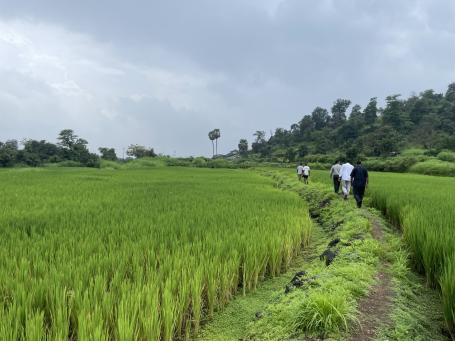
What are Dali Lands?
Dali plots exist across Maharashtra’s forest fringes. They are relics of a colonial policy to provide livelihoods for tribal families while attempting to ensure forest protection. Lacking a clear administrative identity, these lands have been used for generations through temporary permissions and ambiguous use rights. Many were forest lands slated for transfer to the revenue department after independence, a process that remains incomplete.
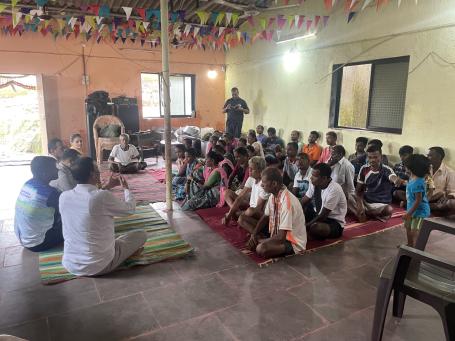
In Tarwari, Dali lands are central to food, fodder, small incomes and seasonal security. The community is now securing Community Forest Resource (CFR) titles under the Forest Rights Act, 2006 (FRA). Some households hold pattas (land titles), others remain in process, slowing down decisions around fencing, sowing, grazing and water management.
While the FRA recognizes common tenure and resolves titular conflicts, it marks the beginning of another complex phase: building the institutions that enable collective use. Communities must form statutory committees, negotiate rules, protect boundaries and manage conflict in landscapes that shift with every season. Without organized participation, shared resources become vulnerable to unplanned use, local power asymmetries, migration pressures and uneven labor. In Tarwari, village elders acknowledge the need for collaboration, “Only when everyone’s name is added can we plan together.” Recognition enables action, but seeing it through requires time, resources and institutions that endure.
Changing Landscapes in Tarwari
Walking through the Dali plots, recent restoration efforts are visible in small, material ways as someone points to saplings emerging from softened soil. Others gesture at ecological signals in the changing landscape: how careful pruning enables regeneration; how pesticide-heavy farming has altered honey quality as pollinators forage in chemically treated fields; and how the community’s food basket has narrowed. Millets, vegetables and medicinal plants that once grew reliably here are no longer viable, undone by erratic rain, depleted soil moisture and labor that families can no longer spare. This shift has pushed households toward greater dependence on the Public Distribution System, narrowing not just diets, but also the autonomy that came from growing what the land once reliably offered.
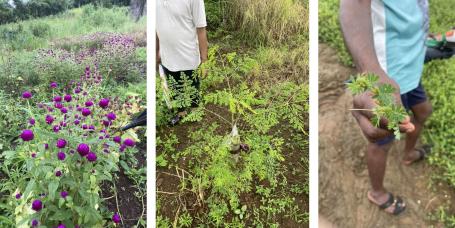
An elder notes, “We always pray before we start sowing. We want livelihoods, but not the kind of development that destroys nature. How can it be development if it destroys what we worship?” This single line reveals more about their land-use decisions than any formal management plan could — development is only meaningful if it protects the ground that enables it.
Restoring Aspirations and Livelihoods
Socio-economic realities emerge through every conversation. Men migrate to cities for seasonal labor, often returning with little income and poorer health. Educated youth speak of the difficulty of securing steady jobs. Women sustain households by foraging, managing food reserves and tending animals. Several express interest in forest-linked enterprises, such as processing fruit, improving honey collection and producing organic inputs. Here, restoration offers women a way to earn in alignment with their priorities around nutrition, stability and tending to their lands. Indeed, restoration models that overlook women’s time, labor and knowledge misread the landscape they aim to restore.
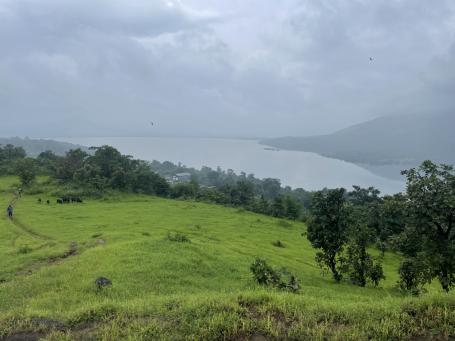
Water repeatedly emerges as a fulcrum of social and ecological life. Tarwari has an old irrigation pipeline running through the Dali plots and a newer Jal Jeevan Mission line for drinking water. There is broad agreement to revive the old line for cultivation and protect the new one for domestic use. Prioritizing water use and access is a precondition for restoration to become viable and succeed.
Reading the Landscape: From Tarwari to Raikhel
A comparison with Raikhel, a village in Maharashtra’s Tuljapur district, helps situate Tarwari’s experience. In Raikhel, grasslands dominate the landscape. Administratively (and sometimes even in local parlance influenced by these classifications), they are referred to as “wastelands” — a legacy of colonial policies that devalued open natural ecosystems. Residents, however, will tell you how new monocultural plantations suppress the grass their livestock depend on, and how wolves abduct goats from villages. These are reminders that grasslands are active habitats, not ‘waste’ lands. People’s ideas for restoring their lands, through combining horticulture, livestock and organic manure, emerge from lived familiarity with what the land can nourish and what it will support.
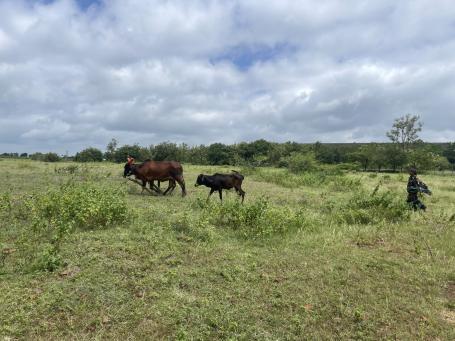
Tarwari and Raikhel echo similar messages. Their residents read landscapes with precision: where water has travelled, where soil is loosening, what vegetation will return, how pollinators’ routes are shifting, and why certain losses are rising. They understand what collective land management requires – clear rules, tenurial security and secure access to water. The limitation continues to be the poor alignment between rights, infrastructure and the long-term institutional support that allows restoration to mature.
As we return to the village, the landscape feels easier to read not because anything on the ground has shifted, but because residents have made its logics visible. WRI India’s research and work with local restoration champions, such as the communities of Tarwari and Raikhel, reaffirms that long-term restoration outcomes are strongest when efforts are community-led and socio-culturally attentive. With over 100 million hectares of India’s land offering potential for restoration, building systems to support restoration work with this understanding can root restoration in the multispecies communities that sustain these landscapes.
All photos by Srishti Kochhar/WRI India.