


Powering Equity Through Decentralized Renewable Energy
This International Women’s Day marks the year of the woman farmer, in recognition of the central role women play in agrifood systems. Women make up around 60% of the agricultural workforce in India, contributing to sowing, irrigating, harvesting, processing, storing, cooking and care.
Limited access to resources, combined with agricultural shocks such as floods and droughts and broader socioeconomic vulnerabilities, disproportionately affects women and restricts their capacity to strengthen and sustain their livelihoods.
Systemic barriers, such as limited land ownership, lack of finance, restricted access to training, and limited representation in decision-making, continue to hamper women’s access to agricultural and energy innovations. Climate variability further exacerbates these challenges.
Clean Energy in Agrifood Systems
Currently, insufficient and unreliable electricity supply constrains the effective use of existing agricultural machinery, limiting the potential for mechanization. Reliable and safe electricity can improve climate resilience, productivity and efficiency of agrifood systems and benefit the communities that depend on them. Efficient storage, drying, processing and irrigation systems can enable farmers to cultivate larger areas, grow a wider range of crops, reduce post-harvest losses and add value to their produce before selling it.
This can make a difference to small and marginal farmers, as well as women farmers, who face greater vulnerability due to climate variability. Despite the critical role women play in the agrifood sector, their access to clean and modern energy technologies remains unequal.
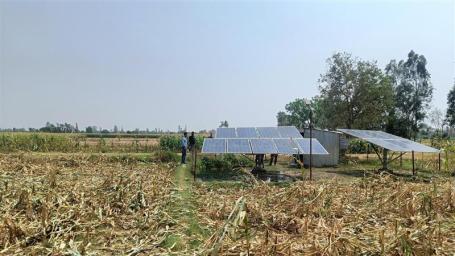
Decentralized renewable energy (DRE) systems, which generate, store and distribute energy locally, have emerged as an affordable means for powering productive appliances in agriculture, especially in last-mile contexts such as remote villages, scattered hamlets, and off-grid or weak-grid areas where centralized infrastructure is unreliable or absent. DRE can power irrigation pumps and small cold storage units as well as improve agrifood processes such as milling grains and drying spices, leading to myriad socio-economic benefits.
Women at the Energy-Agriculture Intersection
Our recent report shows that women are integral to the intersection of energy and agriculture. In our analysis of 21 decentralized solar energy interventions, women are key to shaping how DRE integrates into local agrifood systems.
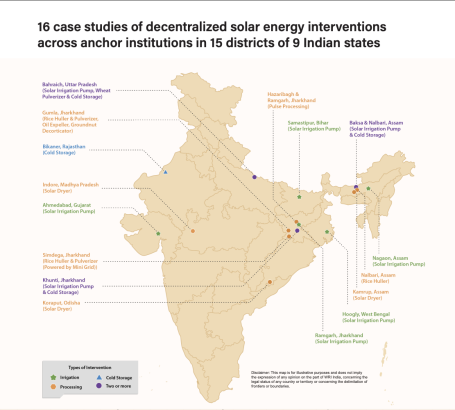
As members of community-level groups – whether water user groups that access and maintain irrigation pumps in Jharkhand, self-help groups (SHGs) in Bihar providing irrigation services to farmers, or dairy cooperative members producing, storing and selling milk in Rajasthan – women play a critical role in planning, operating and governing DRE systems. These interventions have enabled expansion of cultivable land by bringing previously rainfed or fallow plots under assured irrigation. Improved access to affordable and reliable energy has also supported crop diversification, year-round farming and improved market access for women and small and marginal farmers.
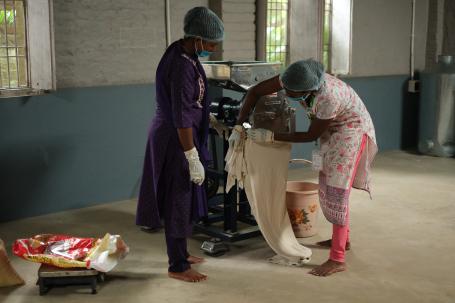
Evidence also suggests that when women are placed at the center of the implementation and financial design, DRE can serve as a catalyst for an inclusive agrifood transformation. For example, in Kamrup district in Assam, a bottom-up approach enables women to go beyond making papads and other spices. Women not only manage the operations and maintenance of DRE interventions but also handle finances, water-sharing schedules, loans repayments, interact with market players, and provide services such as selling water, processing grains and pulses, and drying products.
Gendered Barriers to Energy Access in Agrifood Systems
Our analysis underscores that outcomes are not uniform. Much of the discourse on technological interventions for improving women’s energy access in agrifood systems has focused on mechanizing drudgery or reducing the time women spend on physically demanding tasks. While this is important, it is not enough.
While DRE technologies can offer better access to irrigation, storage and processing, structural gender gaps persist. Unequal land ownership, limited access to capital, information asymmetries on technology and innovation, and lack of affordable and timely financing determine who can participate, scale and reap the benefits of these innovations.
Women farmer collectives, supported by state and non-state actors, are increasingly bridging the gaps in women’s access to credit. However, systematically translating that access into genuine autonomy – such as using technology and decision-making – continues to be a challenge.
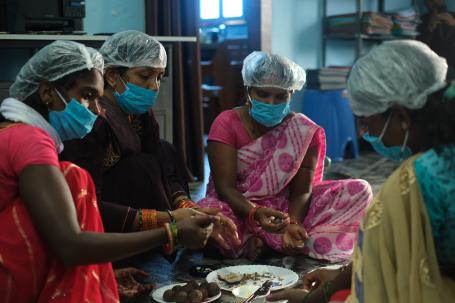
Women’s collectives, producer groups and farmer producer companies (FPCs) demonstrate strong governance capacity when supported with training and financial facilitation. However, without sustained technical support, affordable credit and decision-making power, their role risks being reduced to operational labor rather than meaningful agency.
Access to Agency: Centering Women as Agents of Change
It is essential to recognize women as key economic and institutional actors shaping technological interventions in agrifood systems and not merely as end-users. Our report underlines that bridging gendered energy gaps requires more than making technology accessible through collectives. This would require intentional redesign of financial, governance and capacity-building systems to strengthen women’s asset ownership, technical expertise and negotiating power across value chains. Without addressing these power dynamics, DRE interventions risk reinforcing existing inequalities.
The Union Budget 2026–27 signals a growing recognition of women as drivers of economic growth. It moves beyond credit-led support toward enabling women-led enterprises and collectives that strengthen rural livelihoods and workforce participation. To translate this moment into real change, the broader ecosystem working across agriculture, energy and rural livelihoods must act together.
NGOs, enterprises, SHGs, technology providers, FPCs, policymakers, planning agencies at multiple levels and financial institutions must effectively leverage mechanisms, such as the Budget, gender responsive programs and inclusive financing, to secure women’s structural access and agency within agricultural systems and innovations.
Evidence shows that women’s involvement in operating, managing and governing DRE systems can challenge entrenched gender norms and open new roles in agricultural value chains. By centering women in decision-making roles, through intentional and inclusive design, technological interventions can lead to equitable livelihood and agrifood benefits for all.