


Mapping a Path for Heat Resilience in Tamil Nadu
Flanked by the sea and the Western Ghats, over 59% of Tamil Nadu's population regularly experiences temperatures exceeding 35°C. Between 2011 and 2021, the state experienced more than eight heatwave days a year on average. It has also seen a rise in the number of heat-stress days, particularly from March to August.
Heat stress is likely to increase drastically in the coming years. Health impacts from heat stress and exposure, including morbidity, are often under-reported, unreported, misattributed or not captured adequately in data.
Tamil Nadu has repeatedly expressed its commitment to tackling extreme heat, from the first heatwave action plan in 2019 to November 2024, when it became the first Indian state to recognise heatwaves as a disaster.
Tamil Nadu’s Heat Action Journey
Tamil Nadu's first Heatwave Action Plan (HAP), launched in 2019, mainly focused on short-term, responsive actions like preparing for heatwaves, treating heat illnesses, spreading awareness and offering relief. The HAP responded to heat emergencies but didn’t look at long-term heat risk reduction or prevention. Moreover, HAP lacked cross-sectoral integration across urban development, housing, water management, energy and transport, all of which significantly shape the built environment and affect heat exposure.
In 2024, WRI India supported the Tamil Nadu State Planning Commission in developing the Tamil Nadu Heat Mitigation Strategy (TN HMS), which moves beyond reactive approaches to address the larger heat challenge. It uses scientific data, involves different departments and focuses on long-term solutions. These include cool roofs, planting more trees, designing buildings that naturally stay cool and ensuring that public spaces remain comfortable on hot days.
What is the Tamil Nadu Heat Mitigation Strategy?
TN HMS is a comprehensive policy framework that integrates existing state initiatives and fosters inter-departmental and intersectoral collaboration to augment heat mitigation efforts. It helps identify areas where various stakeholders can align for effective intervention.
The strategy includes:
- Policy review of existing state plans and programs.
- State-level geospatial assessment of heat hazards.
- Consultative approach involving four sub-committees and 38 departments
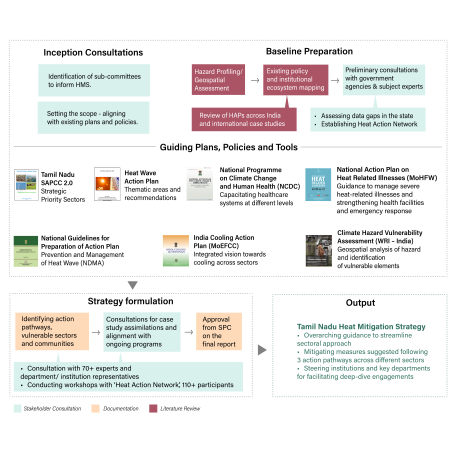
It recommends enhancing data capabilities for detailed assessments, strengthening preventive healthcare and treatment facilities, and fostering partnerships with industry and academic institutions for efficient implementation. In the long-term, it stresses the need for innovation, research and targeted interventions to support vulnerable communities.
Guided by WRI India’s Climate Hazard Vulnerability Assessment framework, TN HMS identifies heat-related challenges and risks across three key systems: natural systems and resources, vulnerable livelihoods and communities, and the built environment. To tackle these risks, the strategy establishes action pathways, based on stakeholder consultations, across three key focus areas: health and well-being, sustained resources and economic productivity, and cooling solutions.
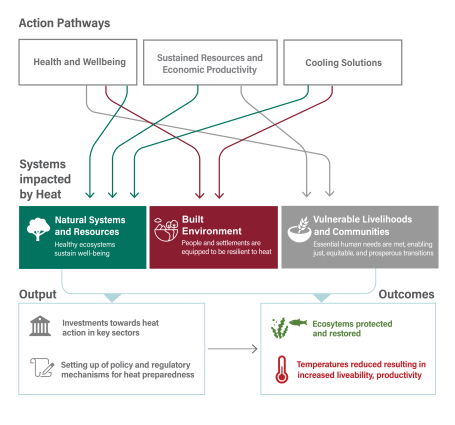
A closer look at the vulnerability and climate hazard mapping exercise within the TN HMS reveals the need for a holistic, data-driven approach to improve heat resilience planning in India.
Assessing Heat Hazards
A key component of developing targeted heat mitigation strategies was the statewide heat hazard assessment. WRI India analysed historical climate trends, real-time data and future projections to map thermal stress hotspots across Tamil Nadu.
Understanding Heat Vulnerability
Vulnerability to heat is multifaceted. It affects human health, socio-ecological systems, built environments, agriculture, animals and the broader natural ecosystem. Additionally, risks from prolonged heat exposure can compound and need to be addressed systemically.
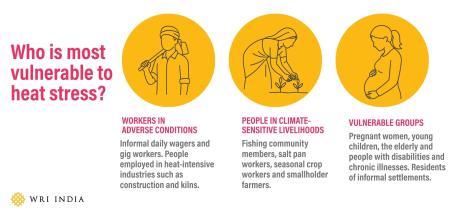
For instance, a 58-year-old brick kiln worker in Ramanathapuram, exposed to high radiant heat for over 8 hours daily, faces compounded risks due to both occupational exposure and age-related vulnerability. Similarly, children in overcrowded informal settlements in Chennai struggle with sleepless nights during heatwaves due to poor ventilation and rising nighttime temperatures.
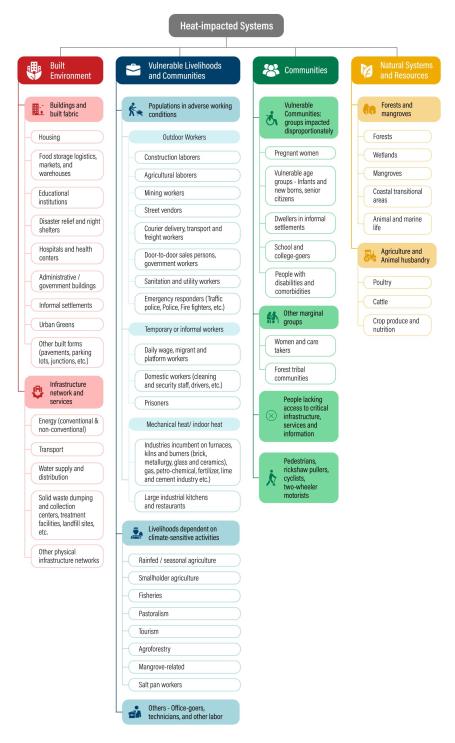
The TN HMS places heat exposure assessment at the center of resilience planning by identifying vulnerable populations, occupations, ecosystems and sectors disproportionately affected by rising temperatures across Tamil Nadu. Building on this understanding, the strategy outlines how heat impacts health, livelihoods, productivity and essential systems, while also mapping relevant mitigation approaches to guide future heat resilience efforts.
Way Forward
The strategy document sets out a comprehensive roadmap for system-wide climate resilience in Tamil Nadu, outlining stakeholder priorities and showcasing case studies and opportunities to strengthen heat resilience. Adopting these principles can support sustainable development and help climate-proof communities and natural environments.
Going forward, close consultation with key departments, identified by the Tamil Nadu State Planning Commission and Tamil Nadu State Disaster Management Authority, will be essential to developing in-depth assessments, priority sector action plans, policies, guidelines and standards that help improve heat resilience.
As India’s heat challenge intensifies, Tamil Nadu’s example can contribute to developing equitable, inclusive and targeted heat action across India’s states and communities.