

Equitable, Productive, Low-Carbon and Resilient System of Cities in India: National Urbanization Policy Recommendations
India’s urban transformation is unfolding beyond metropolitan regions, across a diverse and interconnected system of small towns, Census Towns, and peri-urban areas. Yet existing frameworks have not kept pace with the scale or complexity of this transition. This report presents an evidence-based roadmap for a National Urbanization Policy (NUP) that can support an equitable, productive, low-carbon, and resilient system of cities across the rural–urban continuum.
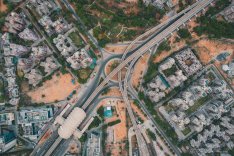
India’s urban reality has outpaced its official measures. The 2011 Census recorded 31 per cent of India’s population as urban. In contrast, the UN's DEGURBA methodology classifies nearly 61 per cent as urban in 2025, with 27 per cent living in peri-urban areas. This large-scale hidden urbanisation remains largely unmeasured, unplanned, and underserved. The result is a diverse and dispersed system of cities characterised by institutional and planning mismatches, infrastructural deficits, and escalating environmental and climate concerns.
Drawing on geospatial analysis, policy review, stakeholder consultations, and national and international case studies, this report demonstrates how better integration across spatial planning, infrastructure, housing, economic development, environmental sustainability, climate resilience, governance, and finance can enable an equitable, productive, low-carbon, and resilient system of cities.
Key Takeaways
The report presents 34 recommendations across nine thematic chapters, with 245 action areas tagged to named actors across central, state, metropolitan and local governments. The action areas are developed with the objective to:
- Recognise and measure functional urbanisation, including peri-urban and transitional areas, to better plan and govern India's evolving system of cities.
- Anchor urban development in statutory plans while linking them with regional planning, climate resilience, strategic investments, and national priorities.
- Augment the supply of serviced land through statutory and regional planning to accommodate urban growth more equitably and efficiently.
- Integrate housing, transport, infrastructure, and economic development to create connected, inclusive, and climate-resilient cities.
- Strengthen regional environmental governance by managing airsheds, watersheds, and ecosystems that extend beyond administrative boundaries.
- Reform urban governance and finance by clarifying institutional roles, strengthening local governments, and improving fiscal capacity.
- Strengthen institutional capacity, technical capabilities, and data systems across all levels of government to support evidence-based urban planning and implementation.
- Monthly Dispatch
- Chapter Snapshots
- Why India Needs a National Urbanisation Policy Now
- India's Diverse System of Cities
- Spatial Planning for an Urbanising India
- Providing Basic Urban Infrastructure for All
- Affordable and Climate Resilient Housing for All
- Bridging Growth and Inclusion in Urban India
- Environmental Sustainability
- Climate Vulnerability and Resilience
- Urban Governance and Finance
- A Roadmap for India’s Urban Transformation

