

When Night Mirrors Day
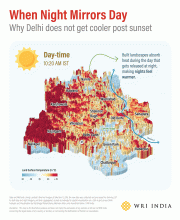

As the India Meteorological Department issues heat stress warnings with temperatures crossing 43°C in several parts of the country, another pattern is quietly emerging. Cities are no longer cooling down after sunset, turning heat stress into a round-the-clock occurrence.
Delhi illustrates this clearly. The city's heat pattern is shaped by land use, which directly influences land surface temperature. While peripheral edges cool by evening, the urban core, dense with built-up areas, continues to retain heat long after the sun sets. This stored heat is released slowly through the night and is felt most acutely by those living under tin roofs and in informal, overcrowded settlements.
The consequences are wide-ranging. Disrupted sleep leads to impaired cognition and reduced productivity. Prolonged heat exposure heightens health risks, particularly for those with underlying conditions such as heart disease. And as cooling needs stretch through the night, energy demand rises accordingly.
As heat warnings become more frequent, the conversation cannot remain centred on peak daytime temperatures alone. How cities store, trap and re-radiate heat demands equal attention, and urgent action.