
India's Leather MSMEs
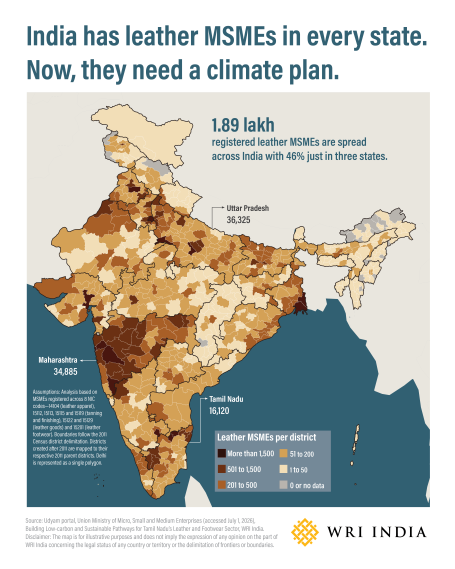

Most conversations about India's leather industry begin with a handful of manufacturing hubs. But the sector's footprint extends far beyond them.
Over 1.89 lakh registered leather MSMEs operate across all 36 states and Union Territories, supporting livelihoods, manufacturing and exports.
At the same time, the sector faces significant environmental challenges. Leather production is energy-, water- and chemical-intensive, and conventional tanning generates significant waste and emissions.
As India works towards Viksit Bharat 2047 and Net Zero 2070, improving the sustainability of leather MSMEs is more than an environmental goal; it's an opportunity to become more competitive, resilient and future-ready.
The transition will require a combination of:
- Cleaner production technologies
- Renewable energy
- Circular economy solutions that turn waste into value
- Sustainable chemicals and water-efficient processes
- Carbon accounting, traceability and access to green finance
These are among the key points explored in WRI India's latest conference proceedings 'Building Low-carbon and Sustainable Pathways for Tamil Nadu's Leather and Footwear Sector', which brings together perspectives from industry, government, financial institutions and researchers on accelerating the sector's sustainability transition.
Explore the data and learn more in our conference proceedings.